Everest Base Camp Trek - 14 Days

Duration
14 Days
Trip Grade
Moderate
Maximum Altitude
5,644m
Starts
Kathmandu
Ends
Kathmandu
Group Size
1-12 People
Activities
Trekking & Hike
Best Time
Autumn & Spring Season
Country
Nepal

Highlights

  • A thrilling journey to the base of the world's highest mountains.
  • Arrival at Kathmandu and transfer to hotels.
  • Thrilling Lukla Airport Flight.
  • From Kala Patthar, watch the sun set over Everest.
  • Experience the Sherpa people, yaks, historic monuments, and monasteries.
  • Discover the serene beauty of the Khumbu glaciers and Khumbu icefalls.
  • Learn to acclimatize your body according to the rising and sudden temperatures.
  • An encounter about the different monasteries, such as Tengboche Monastery and Pangboche Monastery.
  • Enjoy breathtaking mountain views and a variety of landscapes during the journey.
  • Experience the wildlife and flora of Sagarmatha National Park.

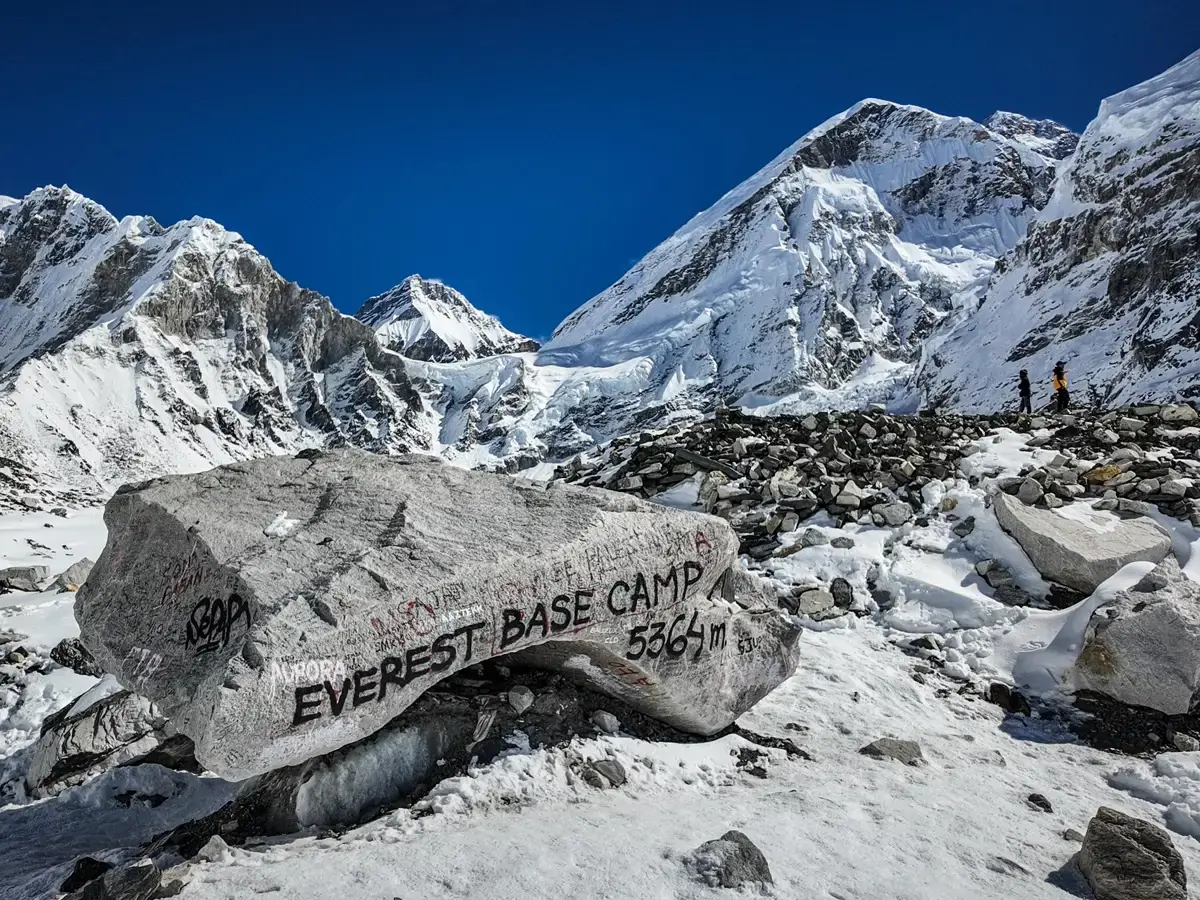
Do you know that Everest Base Camp is one of the most exciting and adventurous journeys? Many folks throughout the world trek to EBC to witness the breathtaking scenery of Mount Everest, standing at 8848 metres above sea level. In the lap of natural beauty and panoramic views, you’ll stand at a height of 5364m, far from the bustling city, noise, and pollution.

In your 14-day trek, you’ll start from the ancient Kathmandu, witnessing the historic monuments and looking forward to answering the call of the Himalayas. The journey will begin and end in Lukla, side by side on the mountain trail with a wave of explorers.

With the best guides, your expedition will start from the Dudh Koshi’s riverbank, crossing Sagarmatha National Park on the route to Namche Bazar. You’ll spend an average of 6 hours munching on the typical foods. The guides and porters ensure a safe and memorable journey, pocketing the world’s top mountain views, including Cho Oyu, Makalu, Ama Dablam, Lhotse, and many other peaks.

Excited about fulfilling your bucket list at the EBC? Let us lead you a step closer to your dreams with an affordable budget, friendly homestays, and a detailed itinerary of the trek. Book your package with Suka Jalanjalan for an effortless guide to the Everest Base Camp.

Your Ultimate EBC Preparation Guide

Before getting ready for your journey to EBC, you should think about the following:

Stamina & Fitness

  • Cardio: swimming, cycling, and running
  • Strength: back, legs, and core
  • Practise hikes with a backpack

Trekking to EBC requires a lot more stamina and fitness. Physically fit persons can easily complete the trail. So, stamina and fitness are essential for trekking in the mountains. Swimming, cycling, and running can help you boost your confidence. Focus on exercising strength for your back, legs, and core. You should practise hikes with a backpack to help your body endure and experience them before going to Everest Base Camp.

2. Acclimatization & Health

  • Rest days to adjust to the altitude
  • Monitor for Acute Mountain Sickness
  • Stay hydrated and eat balanced meals

Rest days in the middle of the trek are necessary to adjust to the altitude. It helps your body to gradually adjust to

the surroundings. Attempting to hike to Everest Base Camp without Acclimatization can significantly affect the body. Severe health issues may be seen without acclimatizaton so our guide makes sure you get enough body rest to adapt to the atmosphere.

Altitude sickness should be reported immediately to the guide or team leaders. Emergency cases will be evacuated through the helicopters immediately. To avoid altitude sickness, stay warm, stay hydrated, and eat balanced meals.

3. Trekking Gear & Clothing

  • Trekking boots and warm layers
  • Backpack and trekking poles
  • Sunglasses, headlamp, first-aid kit

Trekking boots and warm layers of clothes are essential for the Everest Base Camp trek. People should wear beanies, scarves, warm clothes, and adjustable shoes to avoid the Khumbu cough and freezing weather.

Even though our team will carry a first-aid kit, it is suggested that you bring a backpack containing necessities and a first-aid kit. The situations at the Everest Base Camp can be unpredictable sometimes.

4. Mental Preparation

  • Prepare for long walking days
  • Cultivate patience and adaptability
  • Expect basic accommodations

Mentally prepare yourself for long walking days by covering a certain long distance a week or two before. This will gradually help you overcome the difficulty you’ll face during the trek. Develop tolerance and flexibility to avoid any unpredictable situations. Watch the podcasts of trekkers to know about the upcoming trails and ways to maintain belongings.

The teahouses in Everest Base Camp provide cozy and basic amenities. Decent foods and warmed-up comfy beds to crawl into after a long, tiring trek are readily accessible.

5. Route & Logistics

  • Flights and permits booked in advance
  • Guide/porter arranged
  • Accommodation reservations

The flight to Lukla Airport should be booked in advance, checking the availability date and weather conditions. The weather at the Lukla Airport is unpredictable, which might affect the flight. Our Suka JalanJalan provides an experienced guide to assist you on the trek. Porters are arranged to carry your belongings and luggage.

All the accommodations are reserved in advance according to your package, so there won’t be any difficulty in searching for accommodations. All the accommodations are well-maintained, cozy, and in a pleasant environment.

6. Nutrition & Hydration

  • Energy snacks and water supply
  • Meals that fuel endurance
  • Avoid dehydration at high altitudes.

Carrying energy snacks and staying hydrated will help you a lot in your journey. Dehydration can cause altitude sickness, tiredness, and health issues. There are plenty of vegetarian food options in the teahouses, but finding non-veg/vegan items can be slightly difficult. Foods that boost stamina will be provided to elevate enough protein and vitamins in the body.

All about Guides and Porters

Guides and porters make your path to Everest Base Camp a lot easier. Guides will assist in the path to the base camp, while porters will help you carry your luggage. Alternative and safer trails are supervised by the guides to ensure the trek is memorable without any interruptions.

Every guide and porter in Suka Jalanjalan is well-trained, experienced, and comes with full insurance coverage. They play a crucial role in completing the trek throughout the journey.

Guides and porters can provide necessary first aid in case of emergency. Safe evacuation through a helicopter is also provided by our Suka Jalanjalan team if the health condition worsens.

Are you not interested in hiking back to Lukla? Consider taking a helicopter back to Kathmandu instead.

Instead of spending three days trekking back to Lukla, which is around 65 km, you can fly directly from Gorak Shep to Kathmandu in a helicopter.

A helicopter ride from Gorak Shep back to Kathmandu will cost between USD 650 and USD 750 per person. It will not only allow you to save three days but also help avoid the stressful flight from Lukla to Kathmandu.

Everest Base Camp Trek - 14 Days Itinerary

Day 1

Arrival in Kathmandu and conveyance to the hotel

You’ll be welcomed at the airport by our members using a private vehicle to transfer to the hotel. On the 1st day, you’ll unpack your things, spend some time, and learn about the details of your trek while buying anything you’ll need on your journey.

After that, you will have dinner, return to your hotel, and take a rest early while being ready to catch your Lukla flight tomorrow.

Accommodation: Hotel
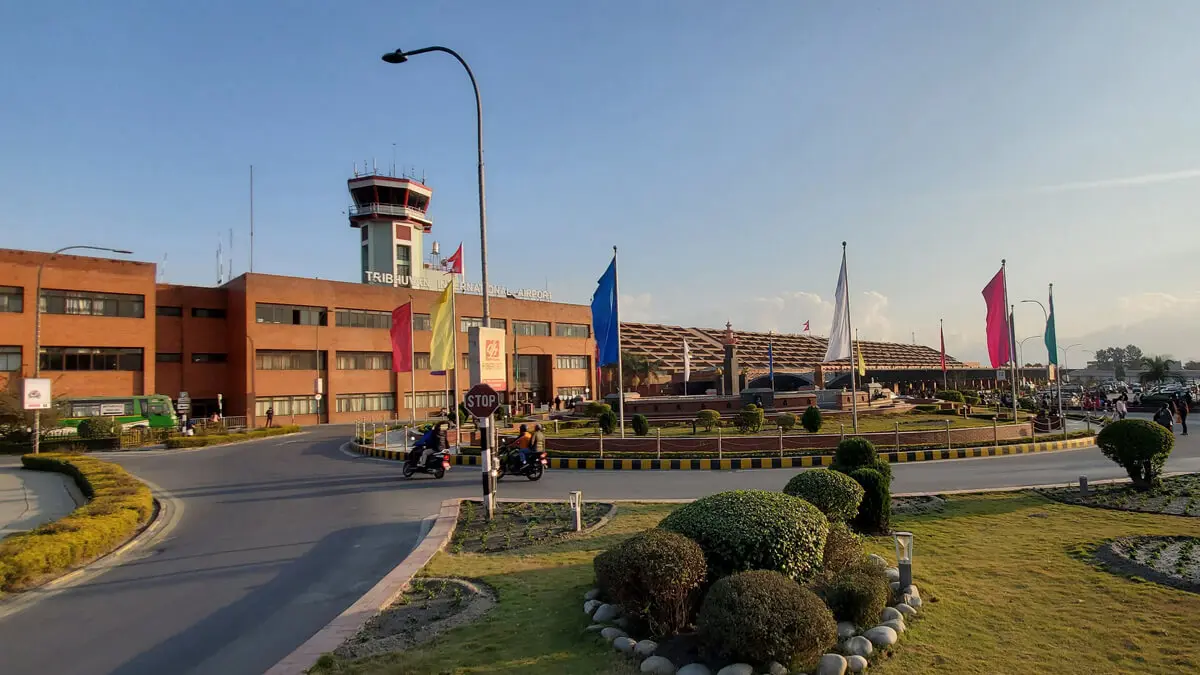
tia airport
Kathmandu Airport
Day 2

Morning flight from Kathmandu to Lukla Airport, followed by a trek to Phakding. (2,610 m/8,563 ft)

On day 2, you will leave at 2:00 AM and drive to Ramechhap Airport for about 4 hours to catch your flight to Lukla. After you land in Lukla, you will meet porters to carry out your luggage and start your trek to Phadking village.

Max Altitude: 2846
Meals: Breakfast, lunch & dinner
Duration: 35-minute flight & 3-hour trek
Distance: 6.2 km/3.8 miles
Accommodation: Lodge
Day 3

Hike from Phakding to Namche Bazaar.

After having breakfast in Phadking, the trek will start to Namche Bazaar, along with sightseeing the Dudh Koshi River. You will follow the trail of the pine forest to Monjo village after crossing the Tenzing Hillary Bridge.

In the Monjo village, we will register for the EBC trek permits before entering the Sagarmatha National Park and reaching Namche with a majestic view of Mount Everest.

Max Altitude: 3440
Meals: Breakfast, lunch & dinner
Duration: 6-7 hours
Distance: 7.4 km/4.6 miles
Accommodation: Lodge
Day 4

Acclimatization in Namche Bazaar: hike to Hotel Everest View.

We will take a break for one day at Namche Bazar to let our bodies adjust to the altitude. In this day we will hike towards the Hotel Everest View.

For the historic moments of mountaineering and an overview of the Sherpa culture and traditions, you can visit the Sherpa Museum and the Everest photo gallery. There’s a hat bazaar on Saturdays that’ll let you explore the mountaineering equipment and clothes.

Max Altitude: 3962
Meals: Breakfast, lunch & dinner
Duration: 4-5 hours
Accommodation: Lodge
Day 5

Hike from Namche Bazaar to the village of Tengboche.

After having breakfast in the Namche Bazaar, we will head toward the Tengboche village. In this trail, we can witness the breathtaking view of Mount Everest and Mount Ama Dablam.

Max Altitude: 3860
Meals: Breakfast, lunch & dinner
Duration: 5-6 hours
Distance: 9.2 km/5.7 miles
Accommodation: Lodge
Day 6

Journey from Tengboche to Dingboche.

We can complete the trail from Tengboche to Dingboche in the afternoon, but the last hill into the Dingboche village can be challenging due to the high altitude.

You can find one of the biggest settlements of Sherpa in the village of Pangboche. You can visit an ancient Pangboche monastery and afterwards have lunch with the locals.

Max Altitude: 4410
Meals: Breakfast, lunch & dinner
Duration: 6 hours
Distance: 12 km/7.45 miles
Accommodation: Lodge
Day 7

Day of acclimatization - trek to Nangkartshang Peak.

For acclimatization, today we are going to stay at Dingboche. Just above Dingboche is Nangkartshang Gompa, which requires a challenging trek of about 2 to 3 hours, or you can go to Pheriche for an afternoon talk on altitude sickness. After sightseeing the serene views of mountains, like Mt. Cho Oyu, Mt. Makalu, Mt. Lotse, and other peaks, you can settle down in Dingboche.

Max Altitude: 5100
Meals: Breakfast, lunch & dinner
Duration: 5 hours
Accommodation: Lodge
Day 8

Journey from Dingboche to Lobuche.

After having breakfast, we’ll head out for Loubuche. Due to the altitude, the trek will be a little more challenging. We will bypass Dungla, but only after a challenging, steep hike up a tall hill. In the Lobuche village, a memorial stupa is made in memory of late climbers and trekkers who lost their lives on Everest.

The view of Mt. Lobuche, Mt. Pumari, and Nuptse will welcome you with its majestic views on the trail of Lobuche.

Max Altitude: 4940
Meals: Breakfast, lunch & dinner
Duration: 5-6 hours
Distance: 8.5 km/5.2 miles
Accommodation: Lodge
Day 9

Hike from Lobuche to Everest Base Camp, passing through Gorak Shep (5,164 m/16,942 ft), and return to Gorak Shep for an overnight stay.

Finally, after a long trek, you are a little bit far from your destination. After trekking from Lobuche to Gorakshep, we will leave our heavy bags there, as it is the last village before the Everest Base Camp.

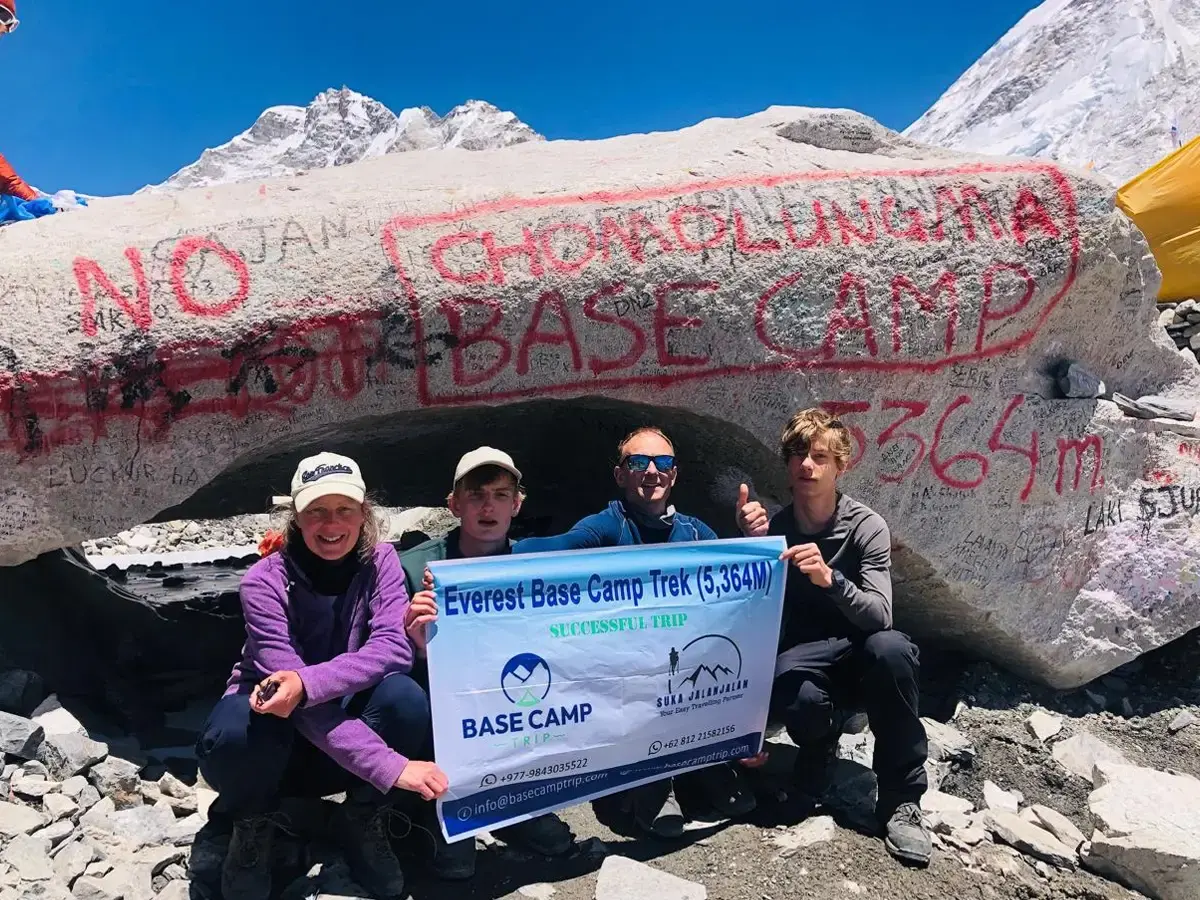
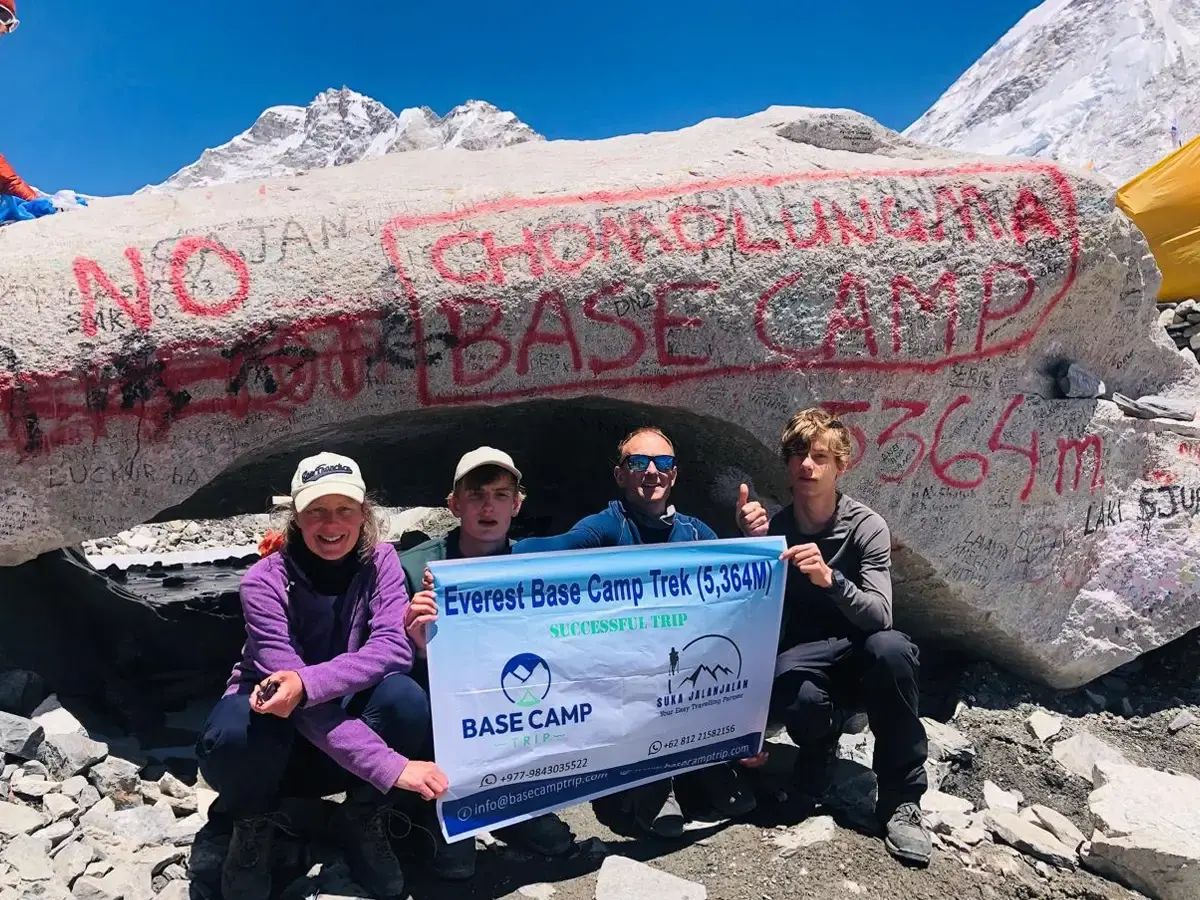
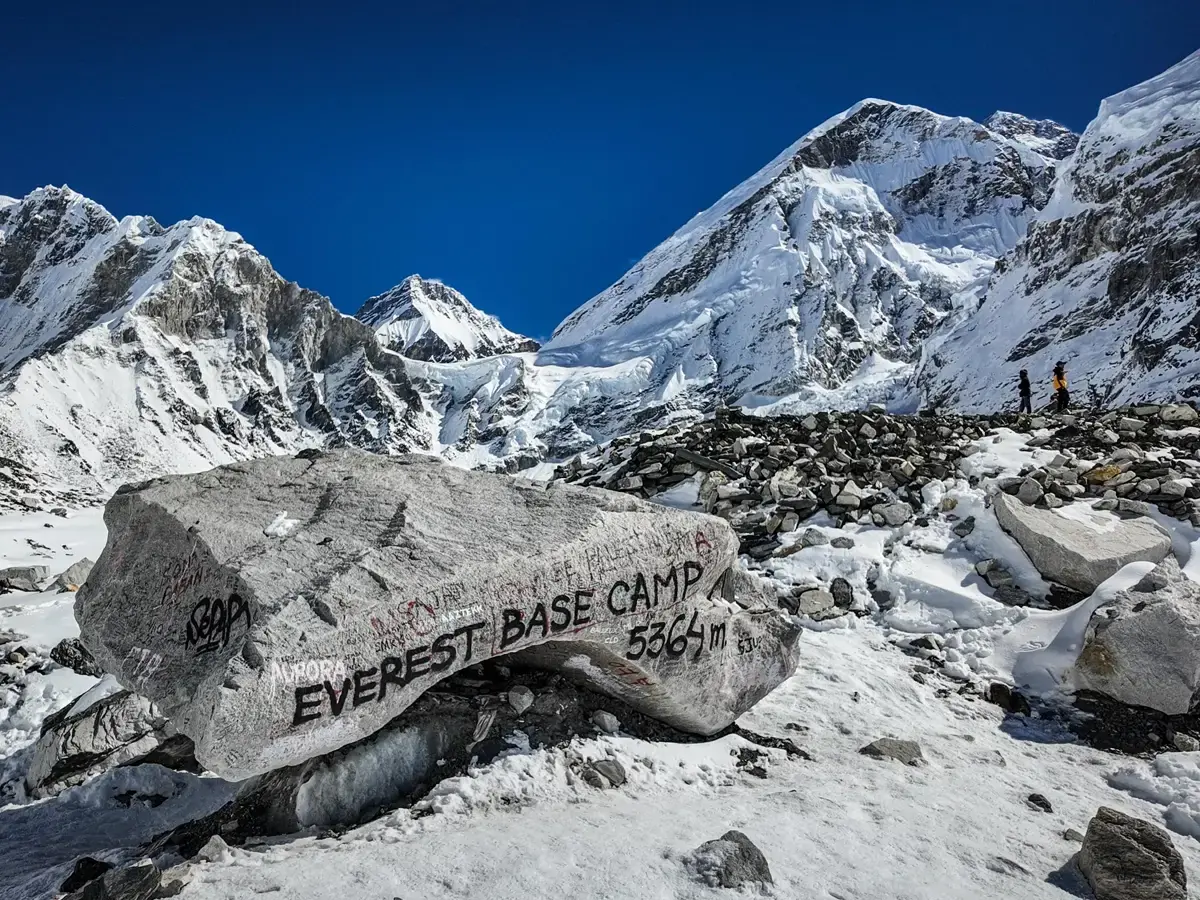
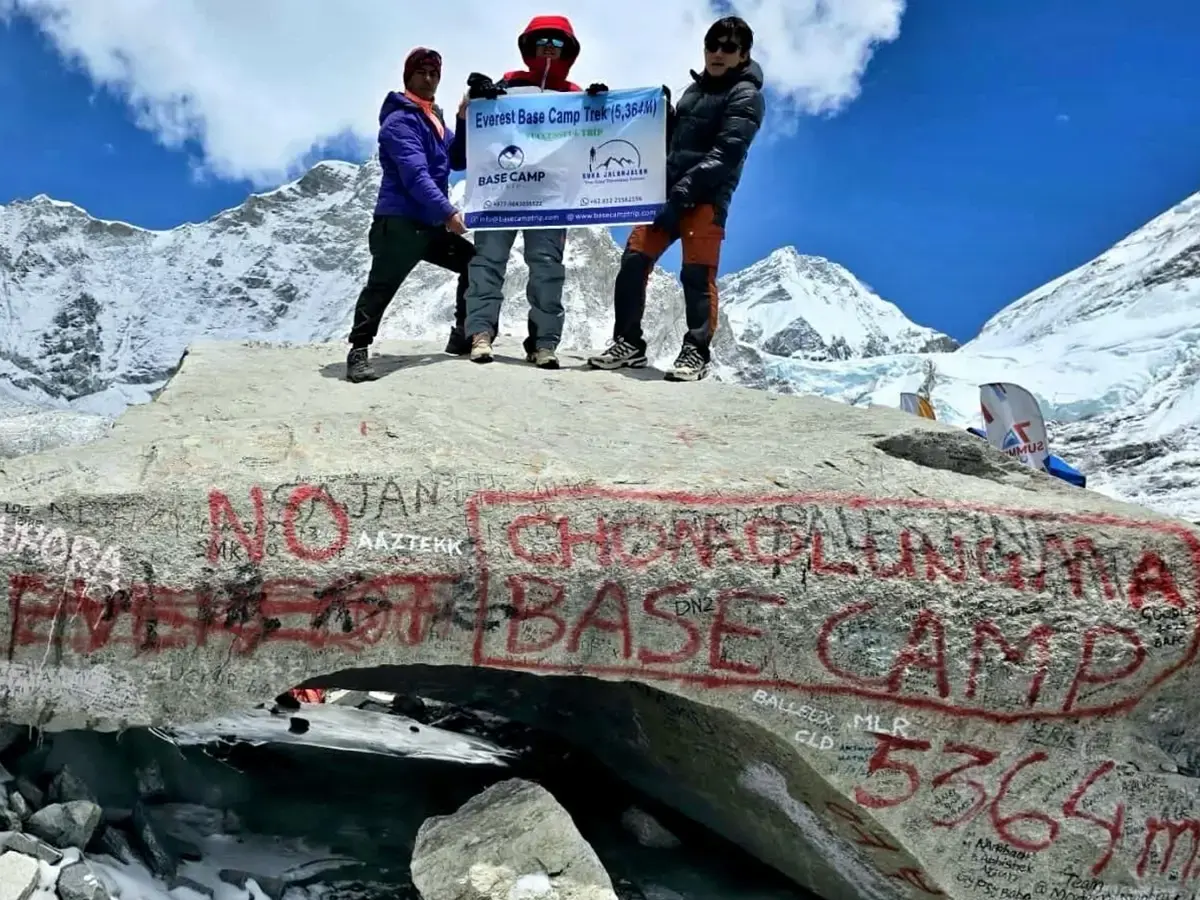
Upon arriving at the base camp, be ready to click photos of the panoramic mountain views and sightsee the iconic large rock that reads "Everest Base Camp".

Max Altitude: 5364
Meals: Breakfast, lunch, and dinner
Duration: 8 hours
Distance: 15 km/9.32 miles
Accommodation: Lodge
Day 10

Ascend to Kala Patthar at dawn and then descend to Pheriche (4,371 m/14,340 ft).

Around 4 am, we will head towards Kalapatthar. Top peaks such as Khumbutse, Lingtren, and Changtse will be covering our paths with Everest in the east.

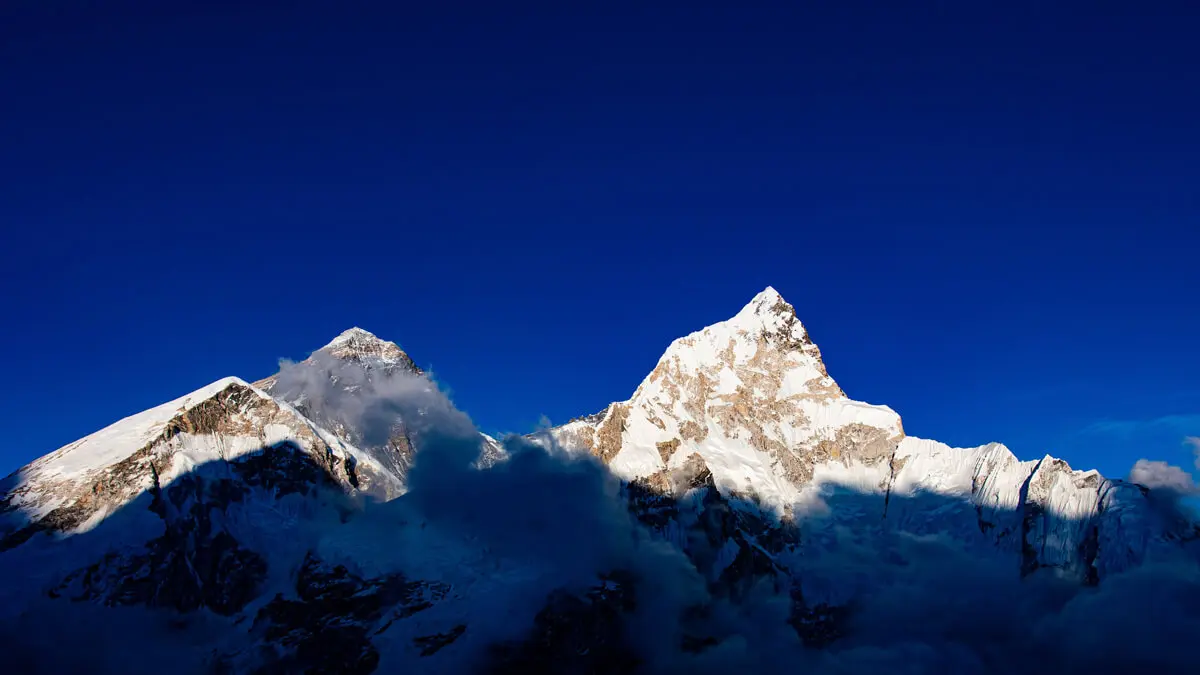
Reaching the Kala Patthar, we will be surrounded by the majestic view of Mount Everest.

After capturing and enjoying the panoramic view of Everest, we will descend to Loubche village. Today, we will take a different route to reach Pheriche village.

Max Altitude: 5545
Meals: Breakfast, lunch & dinner
Duration: 6 hours
Distance: 9.6 km/6 miles
Accommodation: Lodge
Day 11

Trek from Pheriche to Namche Bazaar

The paths from Pheriche to Namche are primarily sloped downhill. The trail descends to the Ijma Khola, then up through the forest to Tengboche Monastery.

After making our way down to Phungi Thenga and then following the path, we will arrive at Namche Bazaar.

Max Altitude: 3440
Meals: Breakfast, lunch & dinner
Duration: 7-8 hours
Distance: 17.7 km/10.9 miles
Accommodation: Lodge
Day 12

Hike from Lukla to Namche Bazaar.

On the final day of the trek, we'll be carrying all the memories from the base camp and head downhill towards Monjo and walk to Phakding. In the presence of fluttering prayer flags and peaceful surroundings, the hike up until we reach Lulka makes the memorable journey worth it.

Max Altitude: 2846
Meals: Breakfast, lunch & dinner
Duration: 8 hours
Distance: 13.6 km/8.3 miles
Accommodation: Lodge
Day 13

Morning flight returning to Kathmandu from Lukla Airport and hotel transfer.

On this day, we’ll take an early flight from Lukla to Kathmandu, where we will give our final goodbyes to the mountains and the serene views. The journey will be wrapped up upon arriving at the Ramechhap airport before reaching Kathmandu in our private vehicle.

You can enjoy the rest of the day shopping, buying souvenirs, and checking out the historic places of Kathmandu.

Max Altitude: 1400
Meals: Hotel
Duration: 35-minute flight
Day 14

Final departure

The 14-day trekking journey ends today. Our team members will escort you on your way to the airport, making sure the trip is valuable with a lot of memories that you’ll take with you.

Meals: Breakfast only
Still Confuse?
No worries — we’re here to help. Whether you have questions or just need a bit more clarity, feel free to reach out. Our team is ready to guide you every step of the way.

Route Map

Route Map

Cost Details

Includes

  • Private four-wheeler transport for airport pickups and drop-offs. 
  • A three-star hotel stay in Kathmandu with breakfast included. 
  • Two flights to and from Lukla. 
  • Accommodation in basic lodges on a twin-sharing basis during the trek. 
  • Daily breakfast, lunch, dinner, seasonal fruits, and a cup of tea or coffee while trekking. 
  • Permits for Sagarmatha National Park and the Khumbu Pasang Lhamu Municipality entry. 
  • A complimentary duffel bag, trekking pole, map, first-aid kit, pulse oximeter, and satellite phone provided by Base Camp Trip. 
  • A licensed Nepali guide, along with a porter (one porter for every two trekkers). 
  • Coverage for accommodation, meals, allowance, and high-altitude insurance for both the guide and the porter. 
  • Certificate of achievement for completing the trip. 
  • All applicable government taxes and service fees are included.

Excludes

  • International flights to and from Kathmandu. 
  • Travel insurance (should include coverage for helicopter evacuation and medical expenses). 
  • Lunch and dinner in Kathmandu. 
  • Trekking attire and equipment. 
  • Purchases and keepsakes. 
  • Gratuities for the driver, guide, and porter. 
  • Beverage costs, including bar tabs and water bottles. 
  • Visa fee for travelling to Nepal. 
  • Any costs not mentioned in the section detailing our expenses. 

Dates and Availability

Select Departure Dates
Date
Status
Cost
Date
Starts: 18 May, 2026 Ends: 31 May, 2026
Status
Guaranteed
Cost
US$1385 US$1499
Date
Starts: 31 May, 2026 Ends: 13 Jun, 2026
Status
Guaranteed
Cost
US$1385 US$1499

Essential Information

The Ideal Time to Trek to Everest Base Camp

The ideal times for trekking to Everest Base Camp are during the spring (March and May) and autumn (September to November). In these seasons, trekkers can enjoy the clear view of Mount Everest and other mountains, and it is safer than in other seasons to trek.

Spring Season (March/April/May/June): Ideal period for the Everest Base Camp Trek.

During the spring season, the weather is gradually clear, calm, and comfortable. Due to the clear and moderate climate, most of the trekkers usually prefer this climate for climbing and trekking. Here are some of the pros of trekking in the spring season:

Advantages
  1. Forests full of red rhododendron, wildflowers, and a clear, majestic view of the mountains, such as Mt. Everest, Cho Oyu, and other top peaks.
  2. Comfortable temperatures and longer daylight make the temperature mild in lower areas.
  3. Spring warmly welcomes trekkers to enjoy the serene view of the mountains up close in a safe way.

Everest Base Camp in the Autumn Season.

The autumn season is also the best season for trekking to EBC. October and November give you one of the best moments for trekking. The clear skies with a small touch of cool temperature make the journey worth starting. Here are some of the advantages of choosing the autumn season:

Advantages:
  1. Warm enough weather during the day and chilly weather at night are perfect for refreshment.
  2. Get to know about the biggest festivals of Nepal (i.e., Dashain and Tihar).
  3. Gokyo Lakes, Three Passes, and peak climbing expeditions like Island Peak and Lobuche Peak are all excellent options.

Avoid the summer (monsoon) season.

The summer season is gradually closing in on the monsoon season; we avoid these seasons because of the sudden changes in the weather. It is potentially hazardous due to heavy rainfall and unpredictable weather conditions.

The weather at Everest Base Camp

The climate of Everest Base Camp significantly depends on the seasons. The ideal time to trek is in spring and autumn. Here’s a close detail about the weather in Everest Base Camp:

1. Season of Monsoon (June to August)

    Weather: Cloudy skies, high humidity, and a lot of rain

   Temperatures: 10–15°C at night and 20–25°C during the day

   Trekking conditions: Includes Lush, green scenery and wet, slick trails.

   Challenges: Rain and humidity make trekking challenging.

2. Season After the Monsoon (September to November)

   Weather: mild temperatures, clear, and dry

   Temperatures: -5–5°C at night, 12–20°C during the day

   Trekking Conditions: Clear skies, pleasant temperatures, and perfect trekking conditions

3. Winter (December through February)

   Weather: chilly temperatures and snow

   Temperatures: 10–15°C at night and 20–25°C during the day

   Trekking Conditions: -10–15°C during the day and -20–25°C at night

   Difficulties: Difficult because of the snow and ice, lovely scenery, and sparser trails.

4. Pre-Monsoon Period (March through May)

   Weather: The weather is warm, dry, and temperate.

   Temperatures: Daytime highs of 15–20°C and nighttime lows of 5–10°C

   Trekking conditions: stunning scenery, blossoming flowers, and less congested paths.

Details Regarding the Lukla Flight

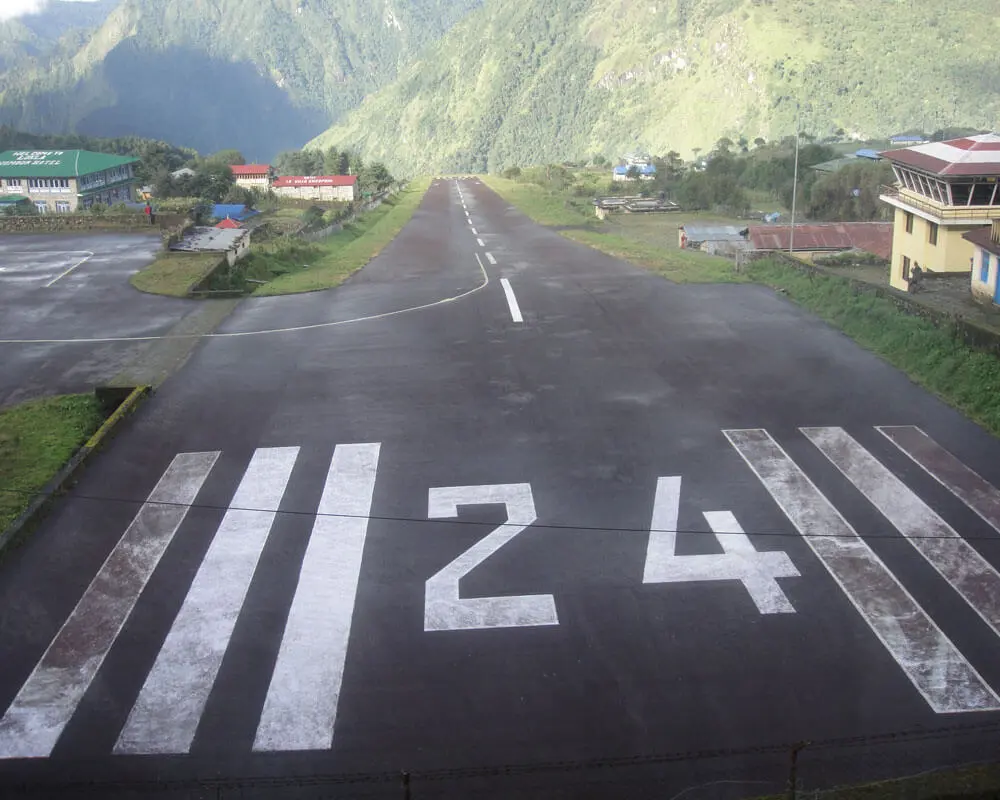
It is crucial to know about the Lukla flight before trekking to Everest Base Camp. The weather conditions can delay or cancel the flight. Lukla Airport, also known as Tenzing Hillary Airport, is one of the shortest and most thrilling flights. To reach Everest Base Camp, we book a flight to Lukla from Kathmandu/Ramechhap Airport. Here are certain points you need to know about the Lukla flight:

Peak Seasons for Lukla Flights – Spring (March–May) and Autumn (September–November)

Spring and autumn are considered the peak seasons to operate Lukla flights. During the peak time, the flights are directed to Ramechhap/Manthali from Kathmandu to manage the air traffic. It will take around 4-5 hours to reach Ramechhap from Kathmandu by vehicle.

Off-seasons

In the non-peak seasons, the flights are operated from Kathmandu directly to Lukla Airport. Sometimes the flights can be delayed/cancelled due to unpredictable weather conditions. To prevent this issue, it is suggested to check weather conditions before booking a flight.

How challenging is Everest Base Camp?

Everest Base Camp is not technically challenging; it entirely depends on the physical well-being of a person. Acclimatization is necessary on the trek to let our bodies adjust to the rising altitude. The trek to Everest Base Camp is physically demanding due to the harsh and high altitude, distance, and continuous trekking. However, this is not the only issue; we should exercise and walk before trekking to Everest Base Camp to allow our bodies to get used to the constant walking.

With a flight to Lukla, proper gear, the right season, and decent fitness, Everest Base Camp is a piece of cake. However, the trek gets more difficult, draining, and a lot more physically demanding if you go by road. Here are some of the challenges in Everest Base Camp:

Altitude Sickness:

Altitude sickness is common in trekkers as the altitude starts from 2000 metres above sea level to 5364 m. Due to low atmospheric pressure and lack of vegetation, the air here is thin. Altitude sickness may affect anybody regardless of age and fitness. From Namche upwards, you will start to feel the effects of high altitude.

Climate change may result in giddiness, headache, and palpitations. These generally don't happen if you follow the path oriented by the guides, but it is risky nonetheless.

If you feel sick, it is best to descend to a lower area and continue your trek after you feel alright. If there’s no improvement in your condition, your guide or you can call for emergency evacuation by helicopter. To prevent altitude sickness, you should stay hydrated and have ginger tea and garlic. These remedies are recommended by the locals to reduce altitude sickness.

Cold Weather:

The temperature on the trek can go freezing even if it's not the trekking season. The days can be chilly without any rays of the sun. The sudden change in the temperature can hamper the health of a person.

People should carry warm wool clothes, thermal clothes, and heating pads to prevent cold. Khumbu cough is one of the examples that resulted from the cold and dry weather. The cough is triggered by the drying of the membrane lining of the lungs due to a long and continuous walk in high-altitude, thin-air humidity and extreme cold. To safeguard yourself from the Khumbu cough, you should protect your chest, neck, nose, and mouth.

Difficult Landscape:

The trail to the Everest Base Camp is vast. Paths start from the rhododendron forests and pine trees and then lead to a rocky roadway. In this difficult terrain, you will walk 15 km at altitude, making the trail difficult and adventurous.

Walking in the rocky area, snow, uphills, and downhills can physically challenge most of the people. To minimise this difficulty, you should practise hiking, do exercises, and be mentally as well as physically prepared.

Medical Emergencies:

One of the reasons for travel insurance is due to the unpredictable weather and health conditions. All our guides have experienced first-aid training and can safely evacuate you through the helicopter in case of emergencies. Other challenges, like injuries, higher altitude issues, and many other issues, may arise while trekking to Everest Base Camp.

Flight delays and cancellations

The weather at Lukla Airport is unpredictable due to the high altitude. A sudden change in weather can result in flight delays and cancellations. Lukla Airport is one of the most dangerous airports in the world due to its shortest runway path between the mountains.

The airport is located on a high mountain plateau, which affects the flight through the strong winds and the clouds. We recommend you keep extra days for travelling in case the flight days result in missing the return flight.

Long walking hours

Each day you have to walk around 5 to 10 hours, covering 10 to 15 kilometres daily. With each added day, the altitude rises from 300 to 800 metres. Changing weather conditions can add a layer of difficulty to the trek, requiring adaptability and endurance.

The trails are covered with suspension bridges, rocky ways, and steep paths, uphill and downhill. Long walking hours in these higher altitude areas are a lot more difficult than in the plain areas.

Accommodation Options on the Everest Base Camp Trek

Even though the accommodations at Everest Base Camp aren't luxurious, they are sufficient to meet daily needs. Most of the teahouses offer cozy, comfy, and decent food to replenish the energy for the next day's trek. However, it will be a little more challenging if you decide to camp rather than stay at the lodge. In this area, camping requires a permit, is somewhat more expensive, and is limited to certain locations.

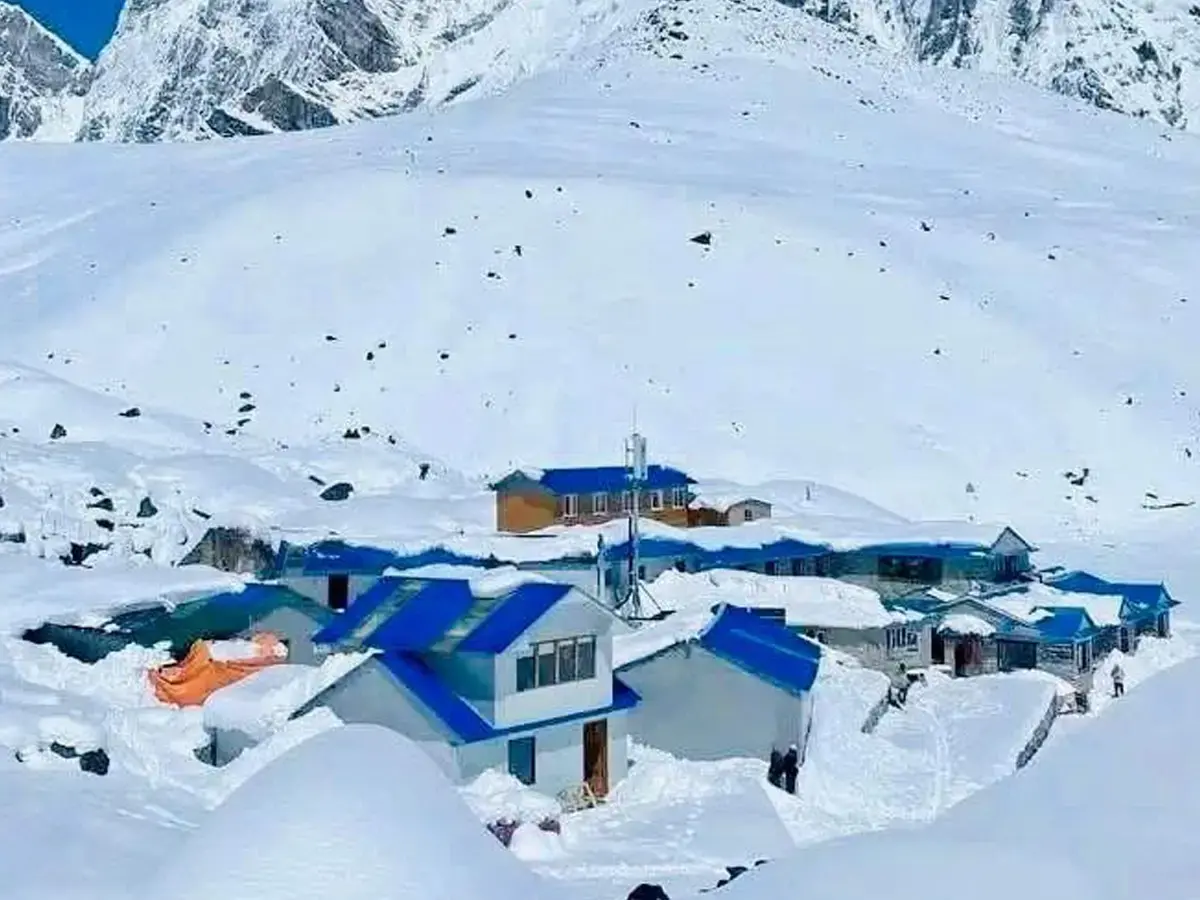
Finding the ideal lodge can be much more challenging during busy times. We provide the best lodges with peaceful views to ease your responsibilities even during busy times. Sherpas run the lodges, which offer cosy meals, cosy beds, and a friendly atmosphere.

How high is Everest Base Camp?

Everest Base Camp lies at a height of 5364 metres above sea level. To reach the base camp, you have to catch a flight to Lukla from Rammechhap. Lukla is situated at 2,860 m, and the trek encompasses the highest point, Kala Patthar. There are two base camps: South Base Camp in Nepal and North Base Camp in China.

Standing at Everest Base Camp means you’re standing at 5.3 kilometres above sea level. In Everest Base Camp, you are surrounded by the panoramic views of various top mountains in Nepal. The elevation of Everest Base Camp is 17,598 feet above sea level. While Mount Everest’s summit stands at 29,032 feet (8,848 metres).

Everest Base Camp, at 5364 metres, is approximately half the height of Mount Everest's summit at 8848 metres. Everest Base Camp can also be visited by a helicopter, which takes a traveller to around 5545 metres with a serene view of the Khumbu region.

Kathmandu accommodation for EBC Trekking

After arrival at Kathmandu, our team will escort you to a well-maintained and comfortable hotel. We book rooms on a twin-sharing/double accommodation basis with ample space for luggage, a private bathroom, and a TV. Single rooms can be booked with notice, but the cost might differ slightly.

Hot and cold showers, free WIFI, AC, and other facilities are provided in the hotel. The accommodation also provides breakfast as a complimentary service.

Altitude Sickness – Ways to prevent altitude sickness during the EBC trek

Altitude sickness occurs when your body doesn’t have enough time to adjust to the thin atmosphere. It is preventable and curable, but can also turn life-threatening if neglected. Pausing your ascent and acclimatisation can help you conquer altitude sickness.

Altitude sickness is common among people who are ascending without proper acclimatization. So, it is significant to let your body adjust to the atmosphere. The only way to cure altitude sickness is by descending to a lower altitude. Most experts recommend descending until the symptoms get better. Which usually required a descent of 984 feet (300 metres) up to 3,281 feet (1000 metres). Supplemental oxygen and medications can also help prevent altitude sickness.

Is it okay for a beginner to trek to Everest Base Camp?

The success rate of Everest Base Camp is over 95%, meaning anyone, irrespective of age, can trek to Everest Base Camp. Our team of Suka Jalanjalan provides you with an expert team of guides and porters to make your trek worth it, even for beginners. Our tour guides have vast and experienced knowledge about the terrain of Everest Base Camp.

The overall distance to trek to Everest Base Camp is 65 kilometres from Lukla. You can reach Lukla by helicopter or plane. Renting a helicopter is more costly than flying. Proper physical fitness and mental preparedness are required to trek to EBC. Cardiovascular exercises such as swimming, running, cycling, rowing, and hiking can help your body adjust to extensive weights. Hiking for a long time can also help the body prepare.

Start your physical fitness routine at least one month before trekking. To build your cardiovascular stamina, you must perform at least 2 hours daily for a month. Mentally and physically prepare yourself to continuously walk for about 6 to 7 hours and 8 to 9 hours in unpredictable situations.

A permit for Sagarmatha National Park and Pasang Lhamu Rural Municipality is mandatory to do the Everest Base Camp Trek in Nepal. They cost around 3000 each for the permit. It is illegal to trek without a permit, and one can be fined or even banned from trekking.

With Suka Jalanjalan, you can rest assured, as our experienced team will provide you with all the necessary details that a beginner can do to conquer Everest Base Camp.

Everest Base Camp trek permits and regulations 2026

A permit must be obtained to trek to Everest Base Camp in the Everest region, as it is a protected area. It is mandatory to get the Sagarmatha National Park permit and the Khumbu Pasang Lhamu Rural Municipality Permit.

Sagarmatha National Park permit fee: NRP 3000 per person

Khumbu Pasang Lhamu Rural Municipality Entrance permit fee: NRP 2000 per person

(Note: A Sagarmatha National Park permit can be acquired from the Nepal Tourism Board Office or at the park’s entry checkpoint in Monjo. Whereas, the Khumbu Pasang Lhamu Rural Municipality entrance permit is obtained after arriving in Lukla or Monjo.

*It is against the law to trek without the required permit; doing so may result in fines or even a ban from entering the nation.

Sagarmatha National Park is a protected area, so some of the rules and regulations must be followed. They are:

  1. Do not litter: Bring your trash down to Lukla so it can be disposed of properly, and avoid littering the trail. Use reusable water bottles during the trek, and avoid buying plastic water bottles.
  2. Respect local culture and traditions:Honour the customs of the locals. Don't force your habits and perspective on others.Before taking any photos of the locals, get their permission. Without the owners' consent, do not enter the lodges' kitchens.
  3. Don’t Disturb Wildlife: Avoid feeding, destroying natural habitat, and disturbing the animals
  4. Avoid Lighting Campfires:Cook only in the designated cooking area and avoid lighting campfires to prevent deforestation.

Packing list

You can get some idea of what to pack for the trek by looking at the information below. Your comfort and safety during the trek will depend on whether you pack the necessary gear, equipment, and clothes, as well as other essential things such as a first aid kit and medications. It's equally crucial that you avoid overburdening yourself with extra gear while hiking.

General

  • All-season sleeping bag and down jacket (if necessary, but must be returned after the hike)
  • Duffle bag (provided by our company; it must be returned after the trek)
  • A thin-layered jacket that is waterproof and windproof (essential for mornings and evenings above 3,000 metres)

Upper Body: Head, Ears, and Eyewear

  • A pair of suitable gloves
  • A warmer hat that covers the ears
  • Sunglasses
  • Neckwarmer
  • Sunscreen (35 to 60 SPF)
  • Beanies and scarves
  • Headlamp and an extra set of batteries

Hands

  • A pair of half-gloves for walking poles (if you prefer)
  • Warmer shell gloves and liner

Upper Body

  • Thermal tops
  • wool jacket or pullover
  • Fleece Jacket
  • Water and windproof shell jacket

Lower Body

  • Thermal undergarments, particularly trousers
  • Waterproof and windproof trousers
  • warmer trousers.
  • Trekking trousers that are comfortable
  • Extra-casual athletic trousers

Footwear

  • A pair of good waterproof trekking boots
  • Pair of sandals
  • 4-5 pairs of woolen socks
  • Sock liners
  • Light shoes and sneakers
  • First Aid Kits and Medicines
  • Assorted adhesive bandages (fabric preferred)
  • Blister treatment cream or similar
  • Insect / anti-itch ointment
  • Ibuprofen or other pain-relief medication
  • Diamox (125mg to 250mg tablets for altitude sickness)

Miscellaneous – but useful on the trek

  • SPF
  • Lip balm
  • Moisturizer
  • Toilet paper, toothpaste, toothbrush, comb, wet wipes, soap, etc.
  • Hand sanitizer
  • Pocket mirror
  • Travel knife
  • Personal first aid kit
  • Camera (memory card, chargers, and extra batteries)

Additional things

  • 4 passport-size photos with original passport
  • Water bottle & filter
  • Quality energy-dry foods (up to you)
  • Power bank and music players
  • Flight details (please make a copy and leave one picture at our office in KTM, in case you want to change your flight date)
  • Bathroom kit (conform, should include toilet paper, plastic bags, hand wipes, towels, soap, etc.)

FAQs

Why Trek to Everest Base Camp?

Trekking to Everest Base Camp offers a unique chance to see Mount Everest and other mountains closely. You can experience a memorable lifetime adventure and encounter the rich culture and traditions of the Sherpa people.

What is the ideal season for trekking?

March to May in spring, and September to December in autumn are considered ideal seasons for trekking. Generally, the monsoon season must be avoided for trekking, as it becomes unpredictable sometimes.

To enjoy the clear view of the mountains, it is best if you trek in the spring or the autumn.

Does the package cover all the costs included during the trip?

Yes, the majority of the necessary expenses for the trek to Everest Base Camp are covered by the package. Airport transfers, a three-star hotel stay in Kathmandu with breakfast, round-trip flights to Lukla, lodging for the trek, and all daily meals (breakfast, lunch, and dinner with tea/coffee and fruits) are all included. It also includes government taxes, a licensed guide and porter, trekking equipment support, and permits for Sagarmatha National Park.

However, personal costs like additional snacks, hot showers, Wi-Fi, battery charging, travel insurance, gratuities, and personal equipment are typically excluded.

How much does it cost to complete the Everest Base Camp Trek?

Depending on the services and itinerary included in the package, the cost of the Everest Base Camp trek ranges from $1,450 to $3,500.

Can any age group trek to EBC?

As long as they are prepared and in good physical condition, people of all ages can walk to the base camp of Mount Everest. As long as they are prepared and in good physical condition, people of all ages can walk to the base camp of Mount Everest. In order to avoid acute mountain sickness, proper acclimatisation is crucial. In order to avoid acute mountain sickness, proper acclimatisation is crucial.

Is Everest Base Camp risky?

The general trail to the Everest Base Camp is safe and sound, but trekking in the off-season or unstable weather can be risky.

Will 14 days be enough for trekking to Everest Base Camp?

Yes, 14 days will be enough to trek and explore the Everest Base Camp.

Is it necessary to book a porter/guide?

It is not necessary to book a porter/guide. However, an experienced team of guides/porters is required for reallocation and arrangements when things get difficult.

A local

Are female solo travellers safe trekking to Everest Base Camp?

Yes, it is safe for females to travel solo to Everest Base Camp, but it is recommended to trek with experienced guides to enhance safety, especially in the remote area.

What type of accommodations and foods can we expect on EBC?

A local lodge is available for accommodations, which provides food, shelter, showers, and internet. The food includes Nepali, Tibetan, Indian, and many other similar Western dishes, along with local beverages. 

What equipment is required to trek in the mountains?

Warm clothing (insulated jacket, thermal layers, gloves, and hat), sturdy trekking boots, a backpack, trekking poles, sunglasses, a water bottle, and a personal first-aid kit are all necessary for trekking to Everest Base Camp. A power bank, camera, and headlamp are optional extras.

Are there any weight limits for the trek to EBC?

Practically yes, it is recommended for travellers to carry a weight of up to 8 to 10 kg. In this way, it will be easy for the porters as well as individuals to have a well-maintained journey.

Is travel insurance necessary?

Travellers who choose to travel with us must have travel insurance. It is advised to have insurance that covers the helicopter evacuation.

What happens if I get sick or injured during trekking?

Our team of guides and porters has experience in providing necessary first aid kits. One can descend the down-trails immediately in case of altitude sickness and fatigue. If an emergency occurs, it may require a helicopter evacuation.

Where can I get the SIM card and exchange money in Nepal?

Travellers can purchase SIM cards at the airport and in nearby stores. There are several banks and money exchange businesses in Nepal where you can exchange money.

What can I do with my gears after finishing the trek?

After finishing the trek, you can keep your personal gear. There are many shops available for selling, donations, and exchange.

Is cash necessary in EBC? If not, how can we pay for the goods?

In order to pay for personal expenses like charging, hot showers, WiFi, and additional food and drinks, cash is required at Everest Base Camp.

Is the internet available in Everest Base Camp?

There are restrictions on the Internet. While Wi-Fi is slow, costly, or nonexistent at higher camps and EBC, it is available in some teahouses in villages like Namche Bazaar and Dingboche.

Customize
Download
Price Per Person
US$1385
US$1499