Annapurna Base Camp Trek via Ghandruk 12 days and 11 nights

Annapurna Base Camp via Ghandruk Overview

Annapurna Base Camp trek is among one of the classic and very popular treks in Nepal. It provides you with rich cultural experience, diverse landscapes and breathtaking mountain scenery. It is an adventurous trek but not as challenging as EBC trek or the Circuit trek.


Annapurna Base Camp trek is the main gateway to the legendary Mountain Annapurna (8,091m/26,545 ft)-the 10th highest peak in the world. It is not just any other regular trek, it is one of the most unforgettable moments in your life. Trekking Annapurna Base Camp trail feels like flipping pages in story books. One moment you will be walking through local villages, in the next you will be walking through lush rhododendron forests and alpine meadows.


This trek will take you 4,130 meters (13,550 ft) above sea level and gives an unforgettable experience in the Himalayas. You will explore two famous tourist cities in Nepal-Kathmandu and Pokhara, spend nights in typical Nepali villages, enjoy nature, explore diverse flora and fauna of Annapurna Sanctuary in just 12 days.


This legendary trek starts from Kathmandu from where you will take a lovely ride, to Pokhara and a short drive to Jhimu. You will then be walking a short hike to Chommrong. It will take you 3 days of trekking to reach Annapurna Base Camp. You will see terraced fields, lush hills, waterfalls and rivers during the trek. The trail is not constantly straight so you will be constantly walking up hil and downhill. It requires decent fitness.


You will be staying in local teahouses during the trek. The warm hospitality will make you feel close to this place. Trekkers often praise Nepal for having the warmest hospitality and very friendly people.


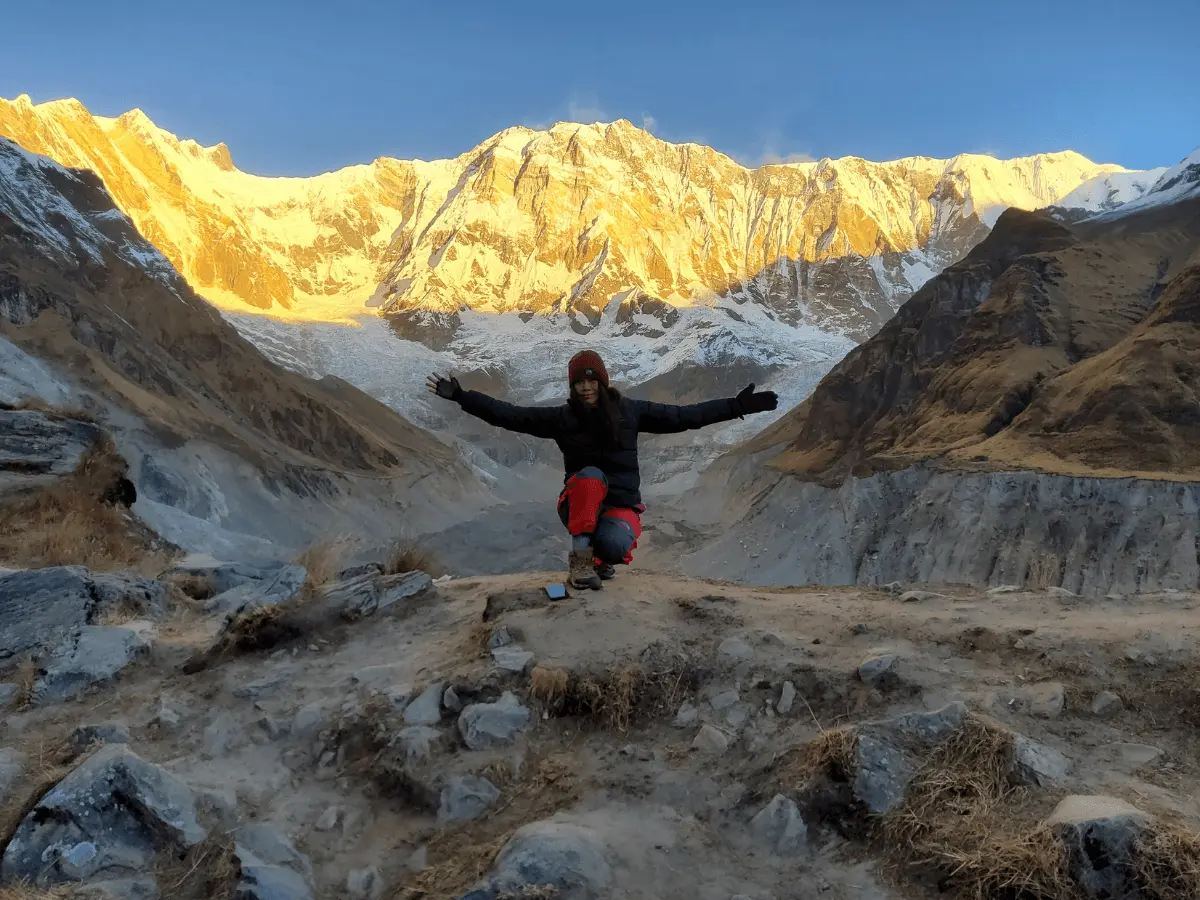
The most excitement comes in this trek when you reach Annapurna Base Camp and you get to see the morning sunrise at Annapurna Base camp. The white towering Himalayas turn golden giving you an intense scenery experience completely indescribable by words.


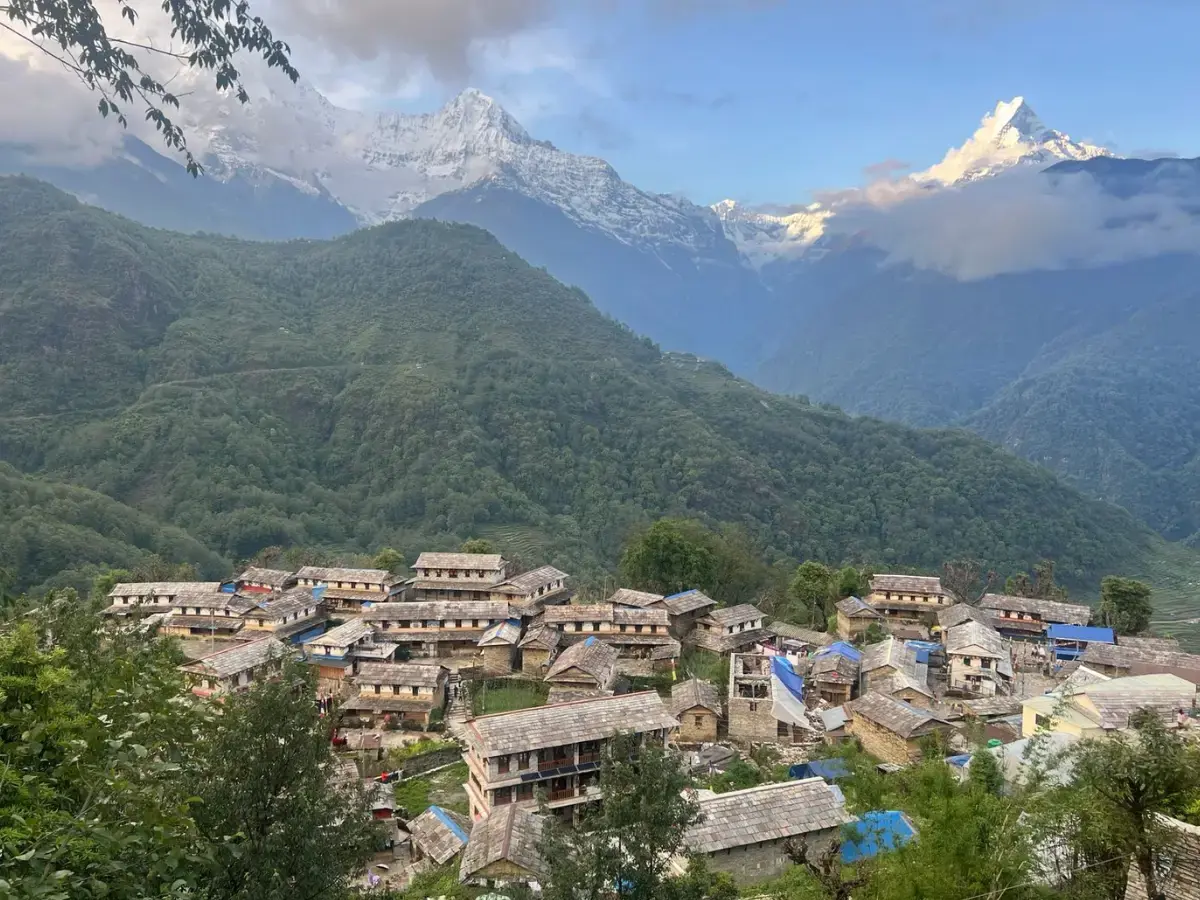
Then you will start descending back. You will trek back to Bamboo and front there to Jhinu Danda. From Jhinu Danda you will be travelling via private jeep to Ghandruk Village, You will spend overnight in this beautiful village. The old traditional houses here are absolutely beautiful. You will enjoy the sunset here and spend your night. There is also the Gurung Museum which has displays of old and traditional things that people from Gurung culture used in their daily lives, that gives you a deeper insight of the culture.


Finally you will then drive back to Pokhara and Kathmandu marking an end to your beautiful Trek, You will leave with beautiful and unforgettable memories.

This trek takes you into a remote region where you will disconnect from modern day hassle and chaos. Nature will rewire your mind and soothe your soul making it a must.


We often forget the beauty of Nature in its raw form. Our everyday modern chaos and hassle makes us forget about the beauty of Mother Nature. Taking a break from such a chaotic life and doing an adventurous trek is beneficial to our own mind and body, that's why i highly recommend you to do this adventure.

Highlights:

  • The perfect short, classic hike in Nepal that includes all the wonders of the Himalayas
  • An adventure but not very challenging trek- ideal for beginner trekkers
  • Explore two famous tourist cities in Nepal- Kathmandu and Pokhara
  • Trek through terraced fields and lush rhododendrons and pine forests
  • Enjoy spectacular waterfalls and rivers along the trail and cross-hanging suspension bridges
  • Discover the diverse flora and fauna of the Annapurna Conservation Area and Annapurna Sanctuary
  • Spend nights in typical traditional Nepali villages resided by Gurung and Magar communities
  • Get a deep insight of Gurung Culture
  • Hike to the lap of the tenth-highest mountain in the world, Mount Annapurna
  • Spend a night at the Annapurna Base Camp and see a gorgeous sunrise the next day
  • Witness jaw-dropping mountain views and beautiful landscapes
  • Enjoy nature and tranquility, disconnect from the digital world, and feel rejuvenated
  • Enjoy sunrise views of Mount Machapuchre, Annapurna South and Hiunchuli

Is Annapurna Base Camp Trek suitable for you?

The best thing about this trek is that you are not required to be an expert or have good trekking experience. Whether you are a kid or adult or someone in their 50s or 60s if you have willpower determination and basic fitness you can achieve this trek.

We can customize the trek according to your fitness and experience. We can add 1-2 extra few days to your itinerary to make this trek achievable. Likewise, we can also male the trek shorter to meet your fitness and experience.

Annapurna Base Camp trekking with a guide and porter

It is common to trek with a guide and porter in Nepal, and the Annapurna Base Camp trek is no exception. Once you leave for the mountains, your guide and porter will be your companion for the rest of the journey.

As you gain altitude and trek through lush forests, there may not always be a network to contact the city team. So, our field team will handle all your compliments and complaints. We make sure our field team is well-trained, expert, professional, and friendly.

The guide will help you navigate the trail, share his knowledge about the mountains and the locals, and ensure your safety. Our guides are trained to provide first aid and have first-hand experience. He will also push you to not give up and keep you entrained with his jokes.

Likewise, a porter carries all your stuff. You only carry a daypack to quickly access essentials like water bottles, snacks, documents, cash, SPF, lip balm, etc. Our porter to trekker ratio is 1:2 and the duffel bag weight limit is 8 to 9 kg per trekker.

Though you will be walking a minimum of 6 hours a day every day to hike to Annapurna Base Camp while adjusting to high altitude and limited services, the help of a guide and porter also plays a huge role in your success and safety!

How do you prepare for the Annapurna Base Camp trek?

First, evaluate your fitness level and then curate a training program to help you reach your desired fitness goals for the Annapurna Base Camp trek.

  • Training duration: At least keep 4 to 6 weeks on hand to actively exercise and improve your stamina and endurance before starting the trek. If you need more time, book your Annapurna Base Camp trek early. We take both early and last-minute bookings for the ABC trek.
  • Stamina and endurance: To walk at least 6 hours a day on rugged, high-altitude terrain, your stamina must be decent. Not only that, the Annapurna Base Camp trek route has many stairs. With decent stamina, you will not get tired and out of breath quickly. Recommended exercises are running, swimming, walking, cycling, etc.
  • Strength and balance: Again, to walk long hours every day, your leg muscles have to be strong. Likewise, you will also carry a backpack under 5 kg while trekking. You have to be strong to walk with this weight. Likewise, the Annapurna Base Camp terrain is steep, rocky, and uneven. So, you must be in control of your body to avoid getting hurt while hiking. Recommended exercises are weight training and day hiking.
  • Trekking clothes and gear: Multi-day treks like ABC require lots of small and big things. From the right trekking clothes and shoes to trekking gear and essentials like toiletries, first aid, etc., there is a lot to pack. So, take your time and make sure you are not overpacked but well-packed for the trek.

Annapurna Base Camp Trek via Ghandruk 12 days and 11 nights Itinerary

Day 1

Arrival in Kathmandu

Our team will welcome you to the airport and escort you to your hotel. We use a private vehicle for airport transfers for your comfort.

You will have a couple of hours to rest and unpack. Later we will meet for a trek briefing where you can ask your questions about the trek.

After that, you can buy anything you need for the trek, have dinner, and return to the hotel to spend the night. We'll sleep early because we have to leave for our trek early in the morning.

Max Altitude: 1338
Meals: Breakfast
Accommodation: Hotel
Day 2

Kathmandu to Pokhara via Bus

You will start your day early by leaving your hotel. Today you will be travelling to Pokhara- a beautiful city in Kaski district, The distance from Kathmandu to Pokhara is about 200km. You will be travelling via deluxe Tourist Bus and the road condition is also pretty good so it will be a long scenic ride from Kathmandu to Pokhara.

After arrival you will be spending your rest of the day here. You can take an evening walk to the Phewa Lake side. The vibes of Phewa Lake side are absolutely amazing. You will spend your night at a hotel in Pokhara.

Max Altitude: 820
Meals: Breakfast, Lunch, Dinner
Duration: 6-7 hours
Accommodation: Hotel
Mode of transportation: Deluxe Tourist Bus
Day 3

Pokhara to Chommrong

The journey for Annapurna Base Camp Trek begins today. You will check out from your hotel early in the morning and drive to Jhinu Danda. It will be a comfortable scenic ride to Jhinu danda.

From Jhinu Danda our trek officially begins. We will start our trek to Chommrong. It takes 3-4 hours to reach Chommrong from Jhinu Danda. The trail follows uneven cliff sides and gradually ascends through lush hills. The trail crosses Kimrong Khola, passes through forests and terraced fields and has a long stone staircase up to the village of Chommrong.

You will be spending your night here at Teahouse in Chommrong.

Max Altitude: 2170
Meals: Breakfast, Lunch and Dinner
Duration: 2 hours drive and 3-4 hour trekking
Distance: 3km
Accommodation: Tea House
Mode of transportation: Jeep
Day 4

Trek from Chommrong to Himalaya/Daurali

The trek from Chommrong to HImalaya/Deurali is roughly about 6-7 hours. We will first descend to Chommrong Khola. We will walk down via stone staircases. The trail then gradually ascends through forests of oak, rhododendron, and bamboo. 

Soon after 2.5 hours of trekking a village called Sinuwa arrives.  Many trekkers spend the night here but we will ascend towards HImalaya/Deurali. We will call it a day off and rest there at a local Teahouse.

Max Altitude: 3200
Meals: Breakfast, Lunch and Dinner
Duration: 6-7 hours
Distance: 10 km
Accommodation: Teahouse
Day 5

Trek from Himalaya/Deurali to Annapurna Base Camp

We are most likely to spend the night at the Himalaya Hotel. From here, the trail goes through a narrow gorge alongside the Modi Khola. We will walk via lush forested hills and come across Hinku Cave.

After exploring the cave, we will ascend to Deurali and continue trekking to Annapurna Base Camp. From Deurali onwards, the trail enters the Annapurna Sanctuary. We will walk on narrow, steep tracks and reach Machhapuchhre Base Camp.

Machhapuchhre (FishTail) is a virgin mountain and not allowed to be climbed. From here, we will walk on rocky trails to Annapurna Base Camp. At the base camp, we will be surrounded by mountains like Dhaulagiri, Annapurna range, Fishtail, Pisang Peak, Gangapurna, Manaslu, etc., all around us.

Max Altitude: 4130
Meals: Breakfast, Lunch and Dinner
Duration: 6-7 hours
Distance: 9 km
Accommodation: Teahouse
Day 6

Enjoy Morning sunrise and Trek down to Bamboo

Today we will begin our day super early to see the beautiful sunrise and breathtaking mountain views from Annapurna Base Camp. The white towering peaks turn golden in color when the sun hits the white snow. It looks absolutely stunning. It gives you a rewarding feeling of completion of such a long Trek. 

After enjoying the view and the breakfast, we will leave the lodge and follow the same trail back to Bamboo. Following the steep, narrow trail to Deurali, descend to the Himalaya Hotel. From here, we will descend through lush forests of rhododendrons and bamboo to reach a settlement called Bamboo.

Max Altitude: 2310
Meals: Breakfast, Lunch and Dinner
Duration: 6-7 hour
Distance: 13 km
Accommodation: Teahouse
Day 7

Trek down from Bambo to Jhinu Danda

It is our last day of trekking. We will leave bamboo village for Jhimu Danda. The trail descends to Kimrong Khola and goes through dense forests of bamboo and rhododendrons.

At Jhinu Danda, we can soak in natural hot springs, which will help us relieve the pain in our muscles after a long hike to ABC. Note that we have to pay a few extra bucks for the hot springs. It is not covered in the package cost.

Max Altitude: 2150
Meals: Breakfast, Lunch and Dinner
Duration: 5-6 hours
Distance: 8 km
Accommodation: Teahouse
Day 8

Jhinu Danda to Ghandruk Village

After a warm breakfast we will leave Jhinu. We will walk 25min from Jhinu Danda to Jeep Stop. We will be travelling via a private jeep that is already waiting for us at Jeep Stop. 

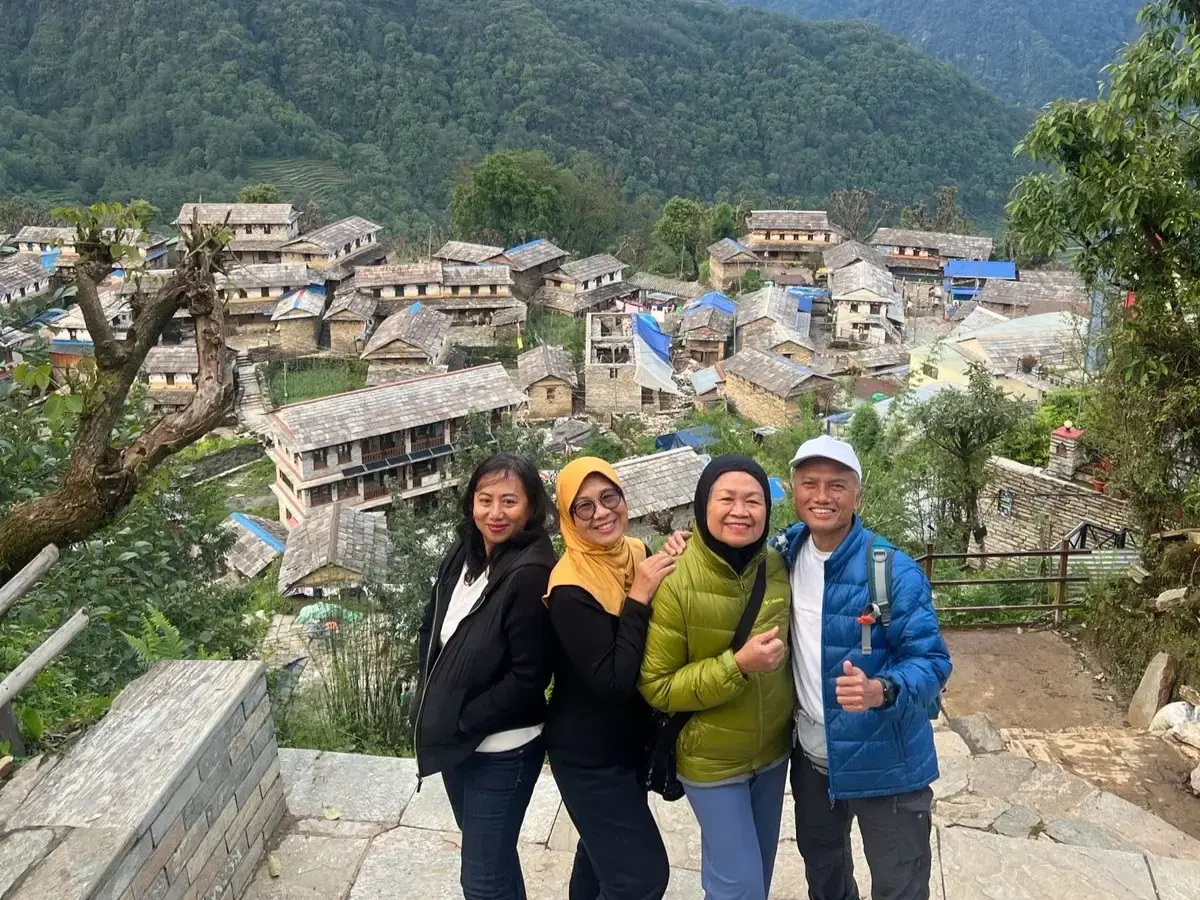
After about 30-40 min of scenic comfortable ride, we will reach our destination Ghandruk Village. It is a renowned traditional Gurung village famous for its stunning panoramic views of the Himalayas. It is also highly popular for its well preserved traditional houses, stone-paved streets, rich cultural heritage and warm homestay hospitality.

You can explore the village and you will also be able to observe Sunset/golden hour from the lodge you will be staying at.

Max Altitude: 2000
Meals: Breakfast, Lunch and Dinner
Duration: 30-40 min
Accommodation: Lodge
Mode of transportation: Jeep
Day 9

Explore Ghandruk Village

You can wake up early in the morning for sunrise views of Machhapuchhre, Annapurna South and Hinchuli. You will be walking and exploring Ghandruk villages seeing the local traditional houses.There is also a Gurung Cultural Museum which you will be visiting giving you a deeper insight of Gurung culture.

You will spend the night here at Ghandeuk village.

Max Altitude: 2000
Meals: Breakfast, Lunch and Dinner
Accommodation: Lodge
Day 10

Ghandruk to Pokhara

You will be leaving the Ghandruk village via  a Private Jeep towards Pokhara. It is a short 3-4 hrs scenic ride. You will have free time at Pokhara. 

We recommend you to visit the beautiful Begnas Lake and Devis Fall. Likewise, explore local markets and buy souvenirs. There are many things you can do in Pokhara. The options are limitless.

Max Altitude: 820
Meals: Breakfast, Lunch and Dinner
Duration: 3-4 hours
Distance: 57.1 km
Accommodation: 3* Hotel
Mode of transportation: Jeep
Day 11

Pokhara to Kathmandu

On this day, we will drive back to Kathmandu. The ride will be comfortable in a tourist bus. The highway is beautiful, so you will enjoy the ride. Upon reaching Kathmandu, the guide will drop you off at the hotel.

The rest of the day is leisure. You should definitely visit some tourist sites like Bouddhanath Stupa and Patan Durbar Square. In the late evening, we will catch up for farewell dinner and hand over the trek certificate to you.

Max Altitude: 1320
Meals: Breakfast, Lunch and Dinner
Duration: 6-7 hours
Distance: 200-208 km
Accommodation: 3* Hotel
Mode of transportation: Deluxe Tourist Bus
Day 12

Departure

You will fly back to your home today. Our team will help you check out and drop you off at the international airport. We hope you are satisfied with our service and looking forward to making more memories with you in Nepal.

Meals: Breakfast
Still Confuse?
No worries — we’re here to help. Whether you have questions or just need a bit more clarity, feel free to reach out. Our team is ready to guide you every step of the way.

Cost Details

Includes

  • Airport pick-ups and drop-offs by private four-wheeler.
  • Overnight stay in a 3-star hotel with breakfast in Kathmandu and Pokhara.
  • Twin-sharing, basic lodge accommodation during trekking.
  • Breakfast, lunch, dinner, seasonal fruits, and a cup of tea or coffee during the trek each day.
  • Annapurna Conservation Area Project (ACAP) permit and TIMS Card.
  • Complimentary duffel bag, trekking pole, map, first-aid kit, pulse oximeter.
  • Licensed Nepali guide and porter (one porter for two trekkers).
  • Accommodation, food, allowance, and high-altitude insurance for the guide and porter.
  • Trip achievement certificate.
  • All government taxes and service charges

Excludes

  • International flight to/from Kathmandu.
  • Travel insurance (must cover helicopter evacuation and medical bills).
  • Lunch and dinner in Kathmandu and Pokhara.
  • Trekking clothes and gear.
  • Shopping and souvenirs.
  • Tips for the driver, guide, and porter.
  • Bar bills, water bottles, and other beverages.
  • Nepal travel visa fee.
  • Any expenses not mentioned in our cost include a section.

Essential Information

The ideal time to do the Annapurna Base Camp trek in Nepal

For the best views, clear sky, stable weather, and mild climate, trek in spring (March to May) and autumn (September to November). These are the peak Annapurna Base Camp trekking seasons, so hundreds of avid trekkers are seen on the trail. The trail is a bit crowded, but you will enjoy the journey to the fullest in these months.

If you wish to avoid the crowd, consider trekking during the off-season summer/monsoon (June to August) and winter (December to February). The weather is very unstable in these off-seasons, so the trails are empty.

However, this doesn't mean trekking is impossible. You just have to pack essential gear and clothing according to the weather, and you're good to go. We organize the Annapurna Base Camp trek in the offseasons, so contact us.

Autumn season (September to November) - Best weather, stable temperatures, biggest Nepali festivals

Autumn is the most loved trekking period because of long daylight hours, fantastic weather, stunning landscapes, and Nepali festivals. Autumn is a post-monsoon time, so the environment is fresh and clean. Most trekkers visit Nepal to trek in the Himalayas during the autumn season.

Spring season (March to May) - Rhododendron blooms, clear skies, warm climate

Spring is the second best time of the year to trek to Annapurna Base Camp. The main highlight of the spring season is rhododendrons blooming all over the trail. It makes the trekking route and scenery extremely pretty. Likewise, the mountain views are spectacular in spring thanks to fresh fallen snow on the mountains.

Altitude sickness and prevention

Altitude sickness happens during high-altitude treks like the Annapurna Base Camp trek. It happens because of low oxygen levels at higher elevations, which your body is not used to.

If you do not acclimatize, you may feel uneasy or suffer from headaches, nausea, vomiting, insomnia, difficulty breathing, and dizziness. These are the early signs of altitude sickness.

If trekkers get these symptoms, they should take altitude sickness medicines. If the symptoms are not controlled even after the medicine, descending is recommended.

Follow the below instructions to avoid altitude sickness and acclimatize during Annapurna Base Camp trekking:

  • Ascend slowly
  • Do not rush
  • Keep yourself hydrated (drink at least two liters of water, soups, and hot teas daily)
  • Do you consume alcohol or smoke while ascending
  • Limit your caffeine intake as it can dehydrate your body
  • Have lots of food and get ample rest- be in good condition to push yourself

Annapurna Base Camp trek permits and regulations 2025

If you plan to do the Annapurna Base Camp trek, you will need the Annapurna Conservation Area Project (ACAP) permit and TIMS Card. These two permits are mandatory for all foreigners entering the Annapurna region.

Permits cost USD 30 and USD 20 per person. Our Annapurna Base Camp trek package price includes permit fees, so you do not need to pay extra money. Additionally, we will obtain the permit on your behalf.

Accommodation during the Annapurna Base Camp trek

Accommodation during the Annapurna Base Camp trek is basic lodges. There are luxury lodges in some villages along the EBC trail, but you have to pay extra money to upgrade.

On the plus side, compared to remote trekking locations like Manaslu, Kanchenjunga, and Makalu, the accommodation on the Annapurna Base Camp trek route is way better. You will get a small but clean and cozy room with a comfortable bed and blanket for the nights.

Likewise, washrooms are shared between the trekkers in most lodges, but still, it is manageable. Western-style toilets are almost available in all villages. We recommend trekkers carry a sleeping bag with a liner on this trek and pack all essential toiletries like hand sanitizer, toilet paper, and soap.

In Kathmandu and Pokhara, you will spend nights in three-star hotels. You can choose between single or shared rooms. A shared room is a good choice if you are trekking with friends or family.

What will you eat during trekking?

The meals on the Annapurna Base Camp trek are simple, clean, and delicious. You will not have junk during the trek, so your body will have a great time detoxing all the toxicity during the journey.

Both vegetarian and non-vegetarian dishes are available. Stick to vegetarian food, especially at upper elevations, where meat is mostly frozen. Even if you want to order non-veg, make sure to inquire about meat freshness.

Some common foods trekkers have in the mountains are thukpa, porridge, fried rice, momo, dal bhat, noodles, pasta, French fries, omelets, toast with jam/butter, pancakes, oats, muesli, paratha, tea, coffee, etc.

Similarly, you will drink boiled water during trekking. Carry a reusable water bottle (a Nalgene water bottle is recommended). You can buy boiled water at a very minimal cost. Plastic water bottles are very expensive and not good for the environment.

Travel insurance for the Annapurna Base Camp trek

Non-Nepali trekkers must buy travel insurance that covers helicopter evacuation and medical bills to join the Annapurna Base Camp trek with us. There are risks of injuries, altitude sickness, or you may fall sick while hiking.

Likewise, there is also a possibility of sudden weather changes or unseen events like natural disasters. In the event of any emergency that is beyond the control of our guide, we may have to use a helicopter to quickly evacuate you from the trail.

And for that, travel insurance with helicopter evacuation coverage is necessary. Without travel insurance, you have to bear large rescue expenses, and there can be delays in the rescue because you have to pay the rescue expense up front or give some kind of assurance.

Guide and porter

You will do the Annapurna Base Camp trek with a professional guide who has mapped this trek route along with many other treks in Nepal hundreds of times. Trekking with a guide ensures your safety and allows you to learn much about the trail, vegetation, hidden places, and the locals.

A porter carries a duffel bag for you during the trek. Thanks to the porter, you do not have to carry a heavy load while navigating the rugged terrain, making the journey very safe and manageable.

*Note: Please tip the guide and porter at the end of the trek. You can budget 20% to 25% of the package in advance for tipping them. There is no fixed amount. It is only guidance.

Nepal travel visa

To enter Nepal for the Annapurna Base Camp trek, non-Nepali travelers expect Indians to obtain a tourist visa. It is available at the Nepalese Embassy or Consulate Office in your country, or you can opt for an easy-on-arrival visa.

Travelers from a few countries are not allowed an on-arrival visa, so please check your country's visa eligibility status for Nepal. Our Annapurna Base Camp trek package does not include a visa fee, nor do we take responsibility for a visa. Travelers have to get it by themselves.

Annapurna Base Camp trek packing list

The following things are required for the Annapurna Base Camp trek:

  • Underwear
  • Base layer
  • Thermal layer
  • Trekking shirt & pants
  • Fleece jacket
  • Down jacket
  • Windbreaker/waterproof jacket & pants
  • Dry towel, cotton socks, woolen socks, scarf, gloves, sunhat, and beanie
  • Trekking boots
  • Casual shoes/crocs
  • Daypack
  • Duffel bag
  • Trekking poles
  • Sunglasses
  • Reusable water bottles and water purification tablet
  • Hand sanitizer, GPS, map, pocket torch, traveler knife
  • SPF, lip balm, toothpaste/brush, deodorant, moisturizer, wet wipes, toilet paper, soap/shampoo bar, comb, etc
  • Electoral powder, insect repellent, band-aid, crack bandage, pain reliever spray, antiseptic cream, general medicine, etc
  • Adapter, power bank, charger, spare batteries
  • Travel insurance document, passport, visa, snacks, journal/pen, passport-sized photos, cash

FAQs

What is special about the Ghandruk route?

The route passes through the beautiful Gurung village of Ghandruk, known for its traditional culture, stone houses, terraced farmlands, and stunning views of the Annapurna range.

How difficult is the Annapurna Base Camp Trek via Ghandruk?

The Annapurna Base Camp Trek is considered a moderate trek. Trekkers walk 5–7 hours daily on well-established trails, with several uphill and downhill sections. A reasonable level of fitness is recommended, but no technical climbing skills are required.

Can beginners do the Annapurna Base Camp Trek?

Yes. Beginners with good physical fitness and proper preparation can successfully complete the trek. Regular walking, hiking, or cardio training before the trek is recommended.

Do I need previous trekking experience?

Previous trekking experience is helpful but not mandatory. Many first-time trekkers complete the Annapurna Base Camp Trek each year.

What is the total trekking distance of the Annapurna Base Camp Trek via Ghandruk?

The total trekking distance is approximately 95–115 kilometers (59–71 miles), depending on the exact itinerary and side excursions.

How many hours do we walk each day?

Most trekking days involve 5 to 7 hours of walking, depending on the itinerary, weather conditions, and pace of the group.

What is the maximum altitude reached during the trek?

The Annapurna Base Camp Trek is considered a moderate trek. Trekkers walk 5–7 hours daily on well-established trails, with several uphill and downhill sections. A reasonable level of fitness is recommended, but no technical climbing skills are required.

Is altitude sickness a concern on this trek?

Altitude sickness can occur above 3,000 meters. The itinerary includes gradual altitude gain to reduce risks. Staying hydrated, trekking at a steady pace, and informing your guide of any symptoms are important.

Is the Annapurna Base Camp Trek suitable for families?

Yes. Families with active children and teenagers often complete the trek successfully, provided they are adequately prepared for multi-day hiking.

Is travel insurance required?

Yes. Comprehensive travel insurance covering trekking up to at least 4,500 meters, emergency evacuation, and medical expenses is strongly recommended.

What type of accommodation is available during the trek?

Accommodation is mainly in local teahouses and lodges. Rooms are generally twin-sharing with basic but comfortable facilities. Dining halls are heated in many villages during colder months.

Is drinking water available along the trail?

Yes. Bottled water, boiled water, and water-refill stations are available in most villages. Using a reusable bottle and water purification tablets is recommended.

Is there internet and mobile network coverage?

Mobile networks and Wi-Fi are available in many villages, but connectivity can be slow or unreliable, especially at higher elevations.

Are there hot showers available during the trek?

Yes, most teahouses offer hot showers for an additional charge, though availability may be limited at higher elevations.

How cold does it get at Annapurna Base Camp?

Temperatures at Annapurna Base Camp can drop below freezing at night, especially during winter and early spring.

When should I book my Annapurna Base Camp Trek?

booking at least 1–3 months in advance is recommended to secure accommodation, guides, and permits.

Why should I trek Annapurna Base Camp with a local Nepal trekking company?

A local trekking company provides experienced guides, authentic cultural insights, personalized service, local support networks, and contributes directly to Nepal's mountain communities.

Customize
Download