Island peak climbing 15 days and 14 nights

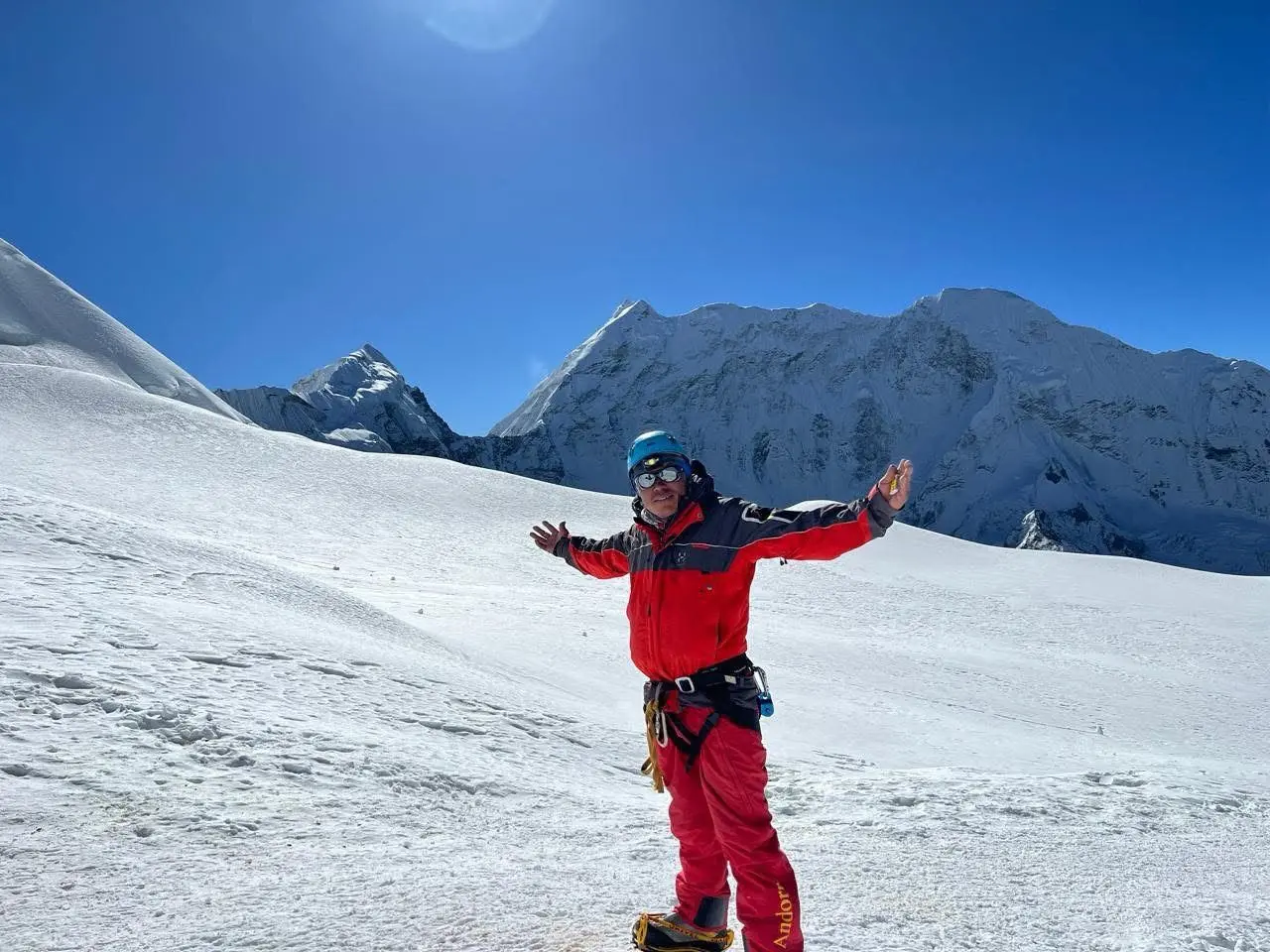
Island Peak which is also known as Imja Tse is located in the heart of the Khumbu region. Situated at 6,189 meters (20,305 feet) it is known as the highest trekking point of Nepal. It offers the ultimate challenge for adventurers looking to test their limits in the Nepal Himalayas. 

Our meticulously crafted 15-day, 14-night expedition is more than just a climb; it is a profound journey that seamlessly blends cultural immersion with essential high-altitude acclimatization and technical training, guiding you safely from the vibrant streets of Kathmandu to the summit.

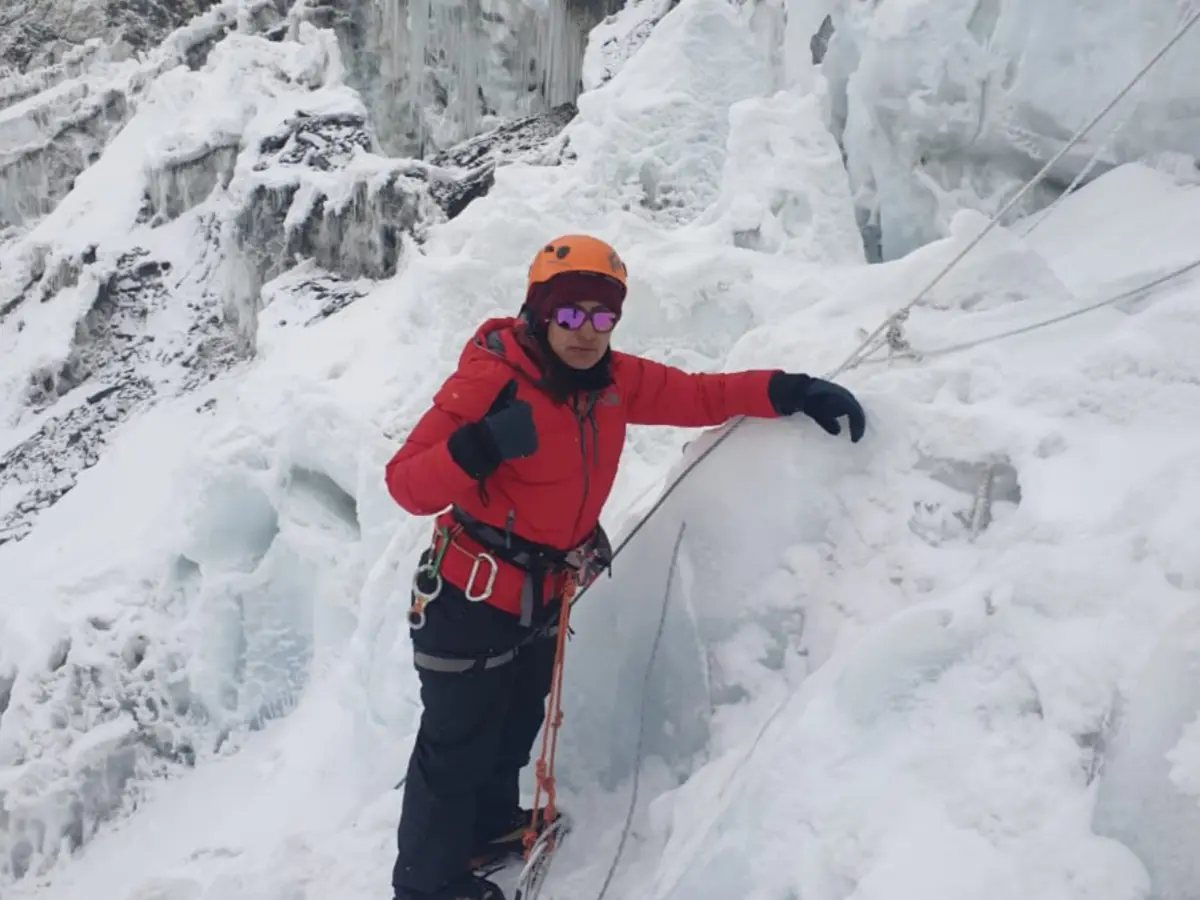
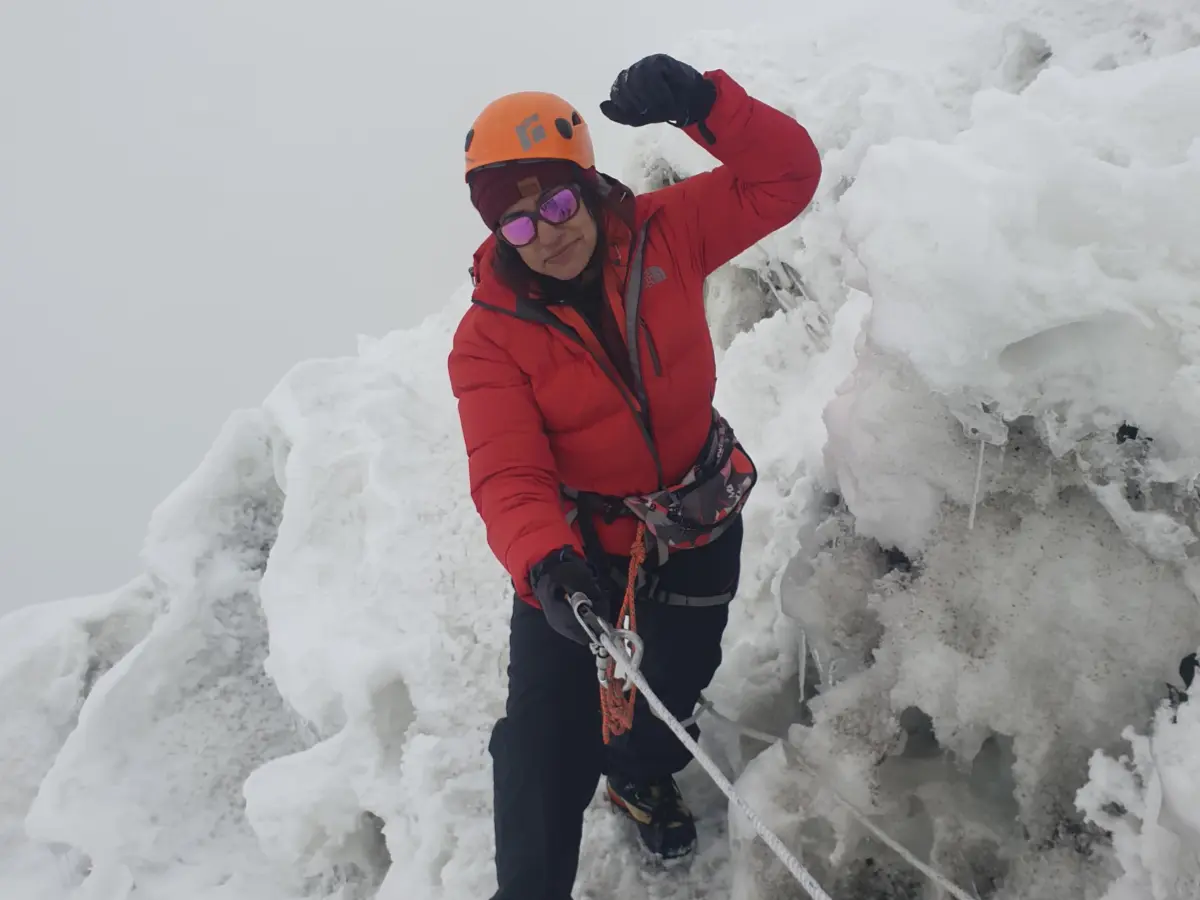
Island peak climbing is also the perfect start for one individual to start mountaineering as it provides basic mountaineering skills like use of ice axes, ropes and crampons.

Our structured itinerary begins with your arrival in Kathmandu, followed by a scenic flight to Lukla to commence the trek. Over the next two weeks, you will be navigating through the Everest region. Our package includes proper acclimatization days in Namche Bazaar and Dingboche, before reaching Chhukung for a rest day and hike to Chhukung Ri. On Day 10, we will trek to Island Peak Base Camp for final ice-climbing training where our guides will provide you with basic training about use of ropes, ice axe, crampons etc which will be essential for the summit day. After the successful ascent we will return back to Lukla and catch a scenic flight back to Kathmandu.

Throughout the trek you will be staying in cozy teahouses where you will experience warm Sherpa hospitality. This trek will help you to disconnect from the modern day chaos and immerse yourself in the raw beauty of the mountains.

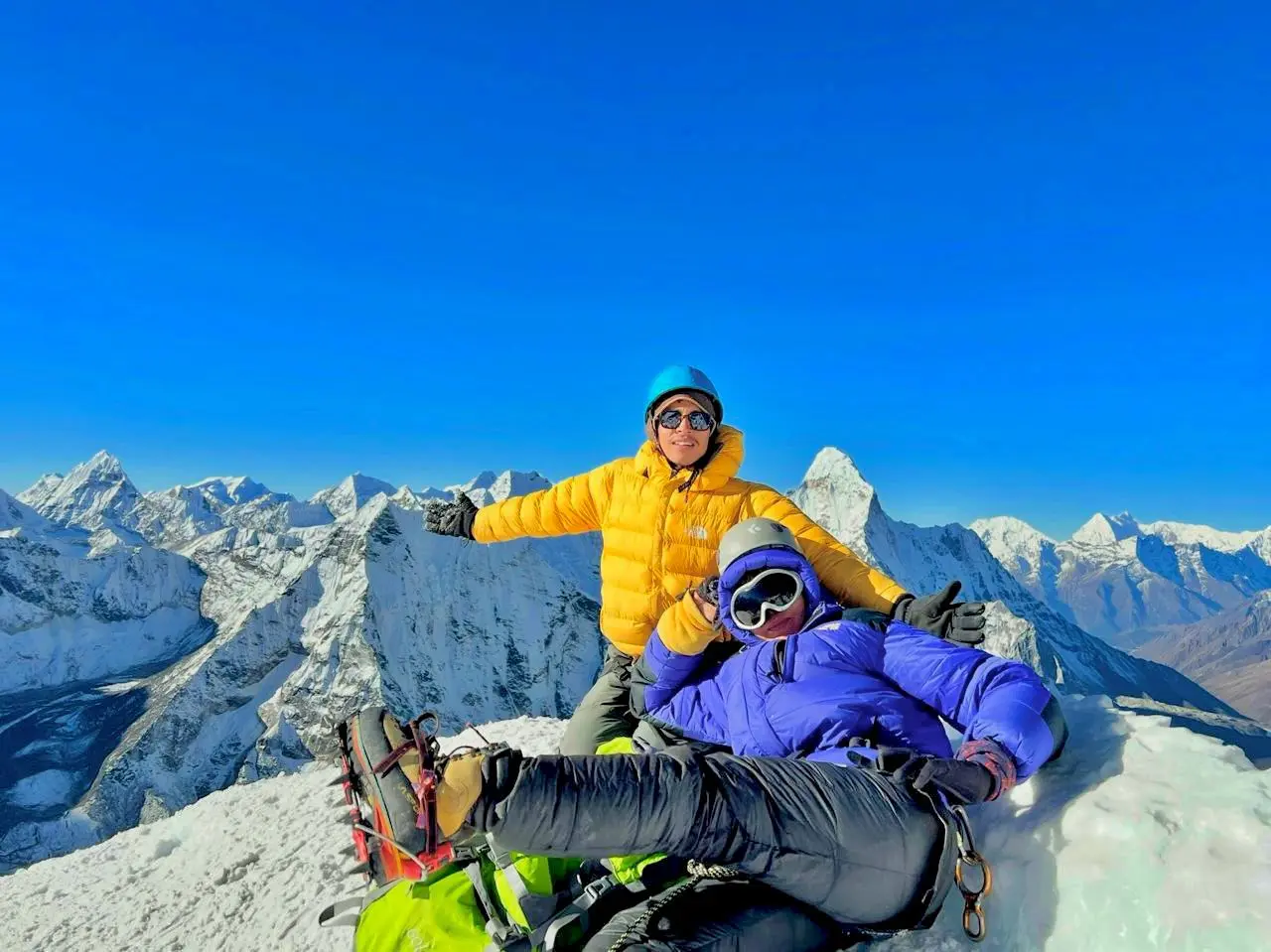
The experience is designed to sooth  your mind and help push your boundaries, the breathtaking sight of Lhotse and Ama Dablam at sunrise from the summit. The experience is quite unreal, filled with joy and happiness. 

Overall it is a transformative escape that rewards you with memories lasting a lifetime.

Highlights:

  • Start and end the journey with thrilling Lukla flights

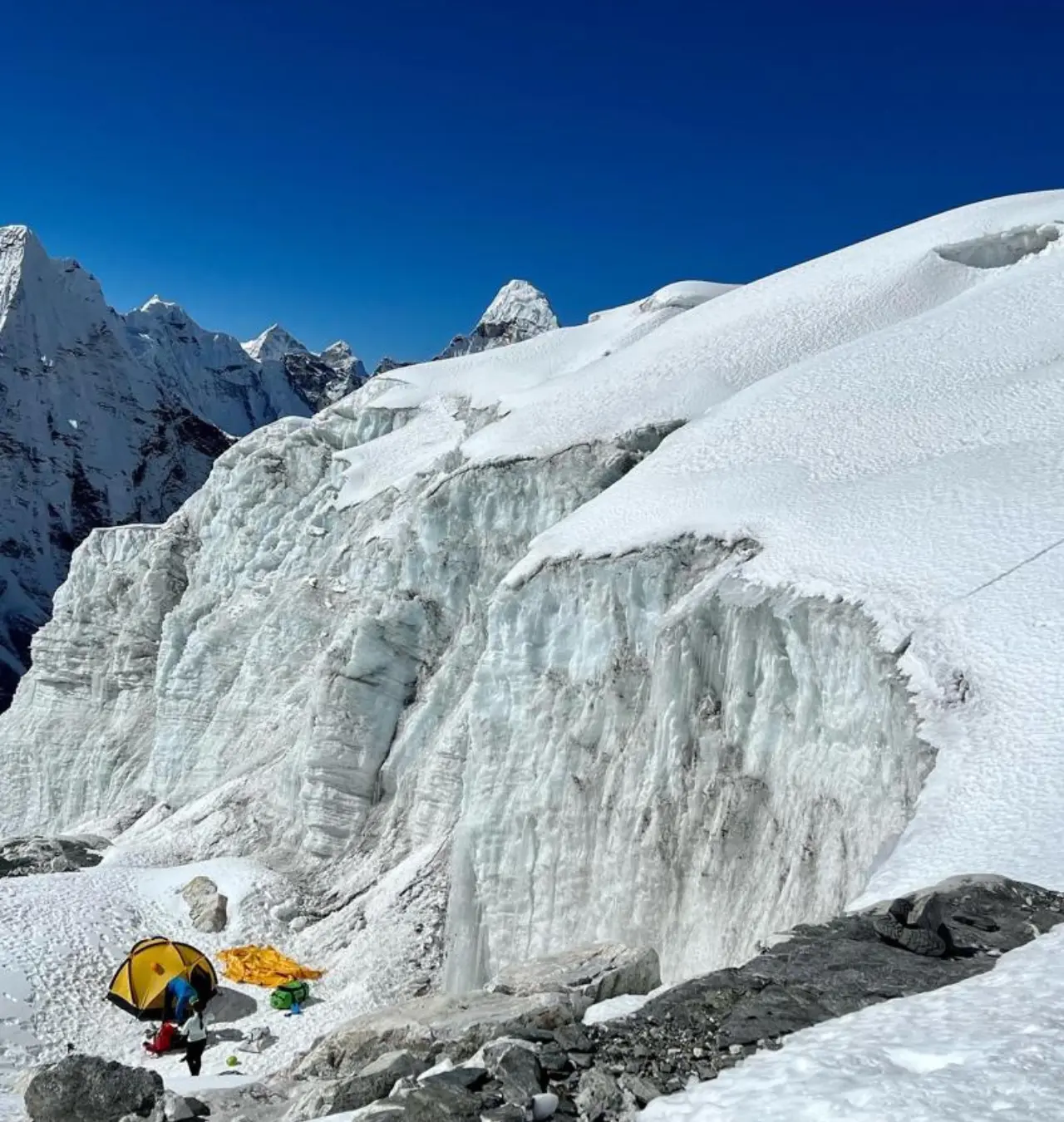
  • Climb Island Peak, one of the best 6000 meters trekking peaks in Nepal

  • Trek through the scenic valleys and beautiful Sherpa villages

  • Cross several suspension bridges over the Dudh Koshi River and ascend through rhododendron forests

  • Enjoy the mountain lifestyle and see the culture and traditions of mountain communities closely

  • Visit Tengboche monastery and explore many stupas, chortens, and prayer wheels along the trail

  • Fantastic acclimatization plan with two rest days

  • Explore the diverse vegetation of Sagarmatha National Park

  • Get pre-climbing training from your guide before the summit push

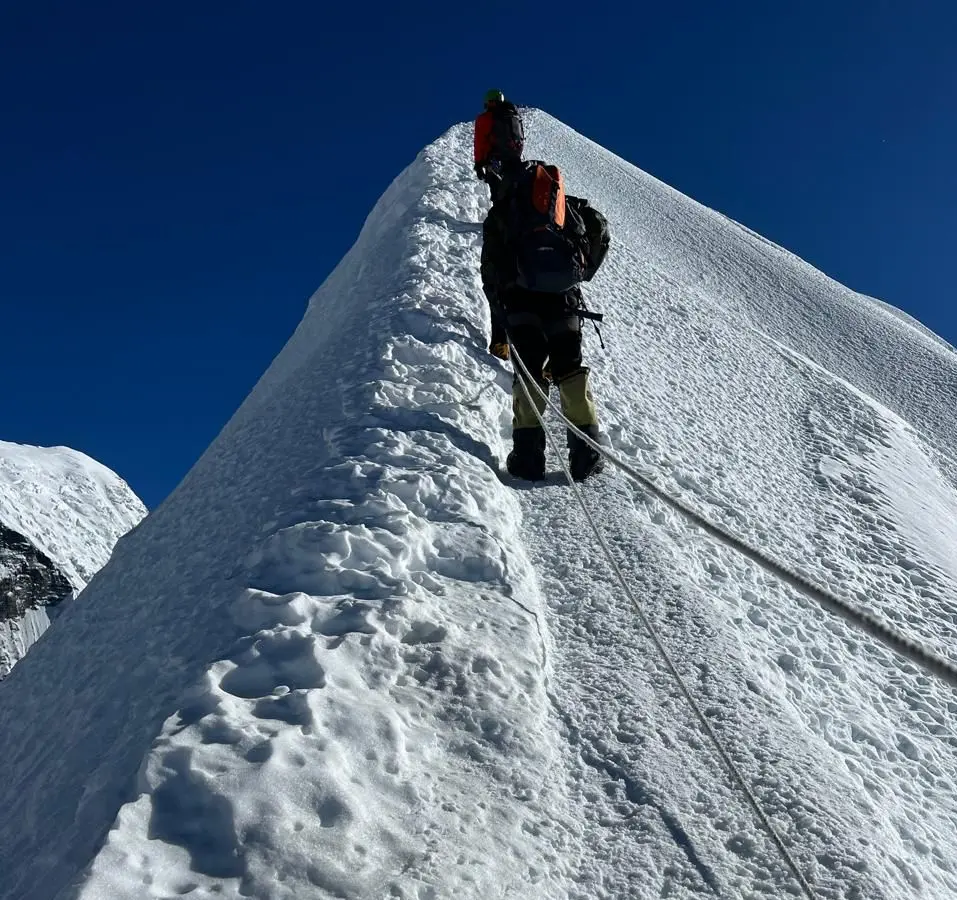
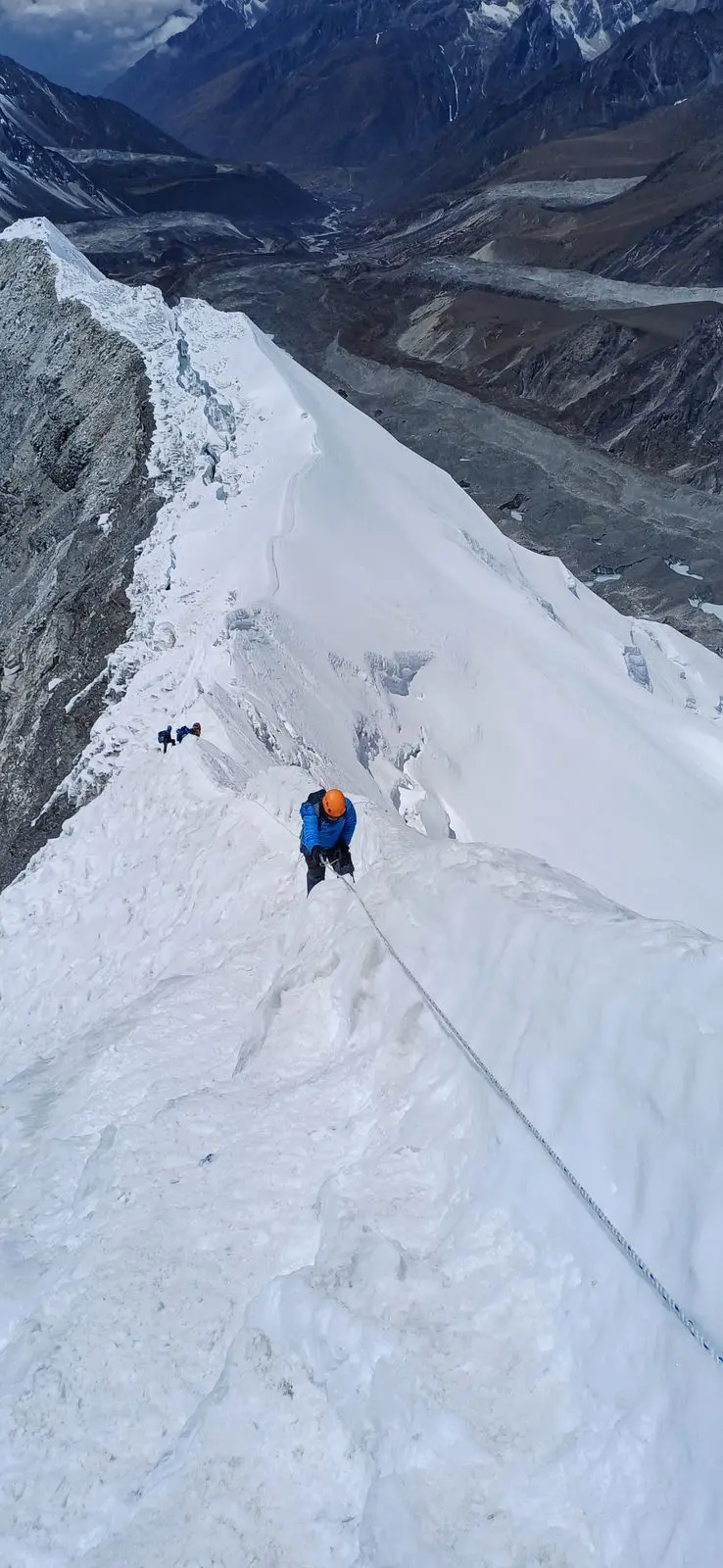
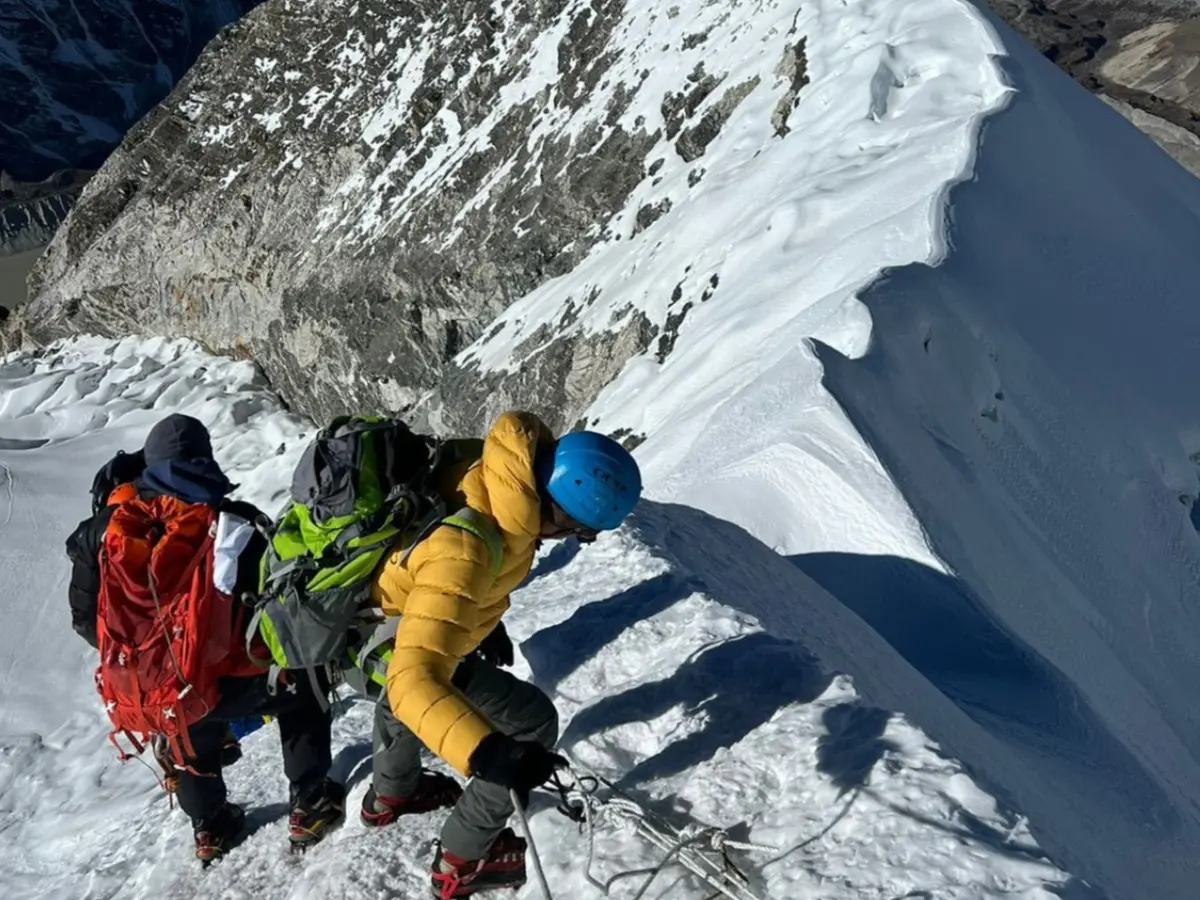
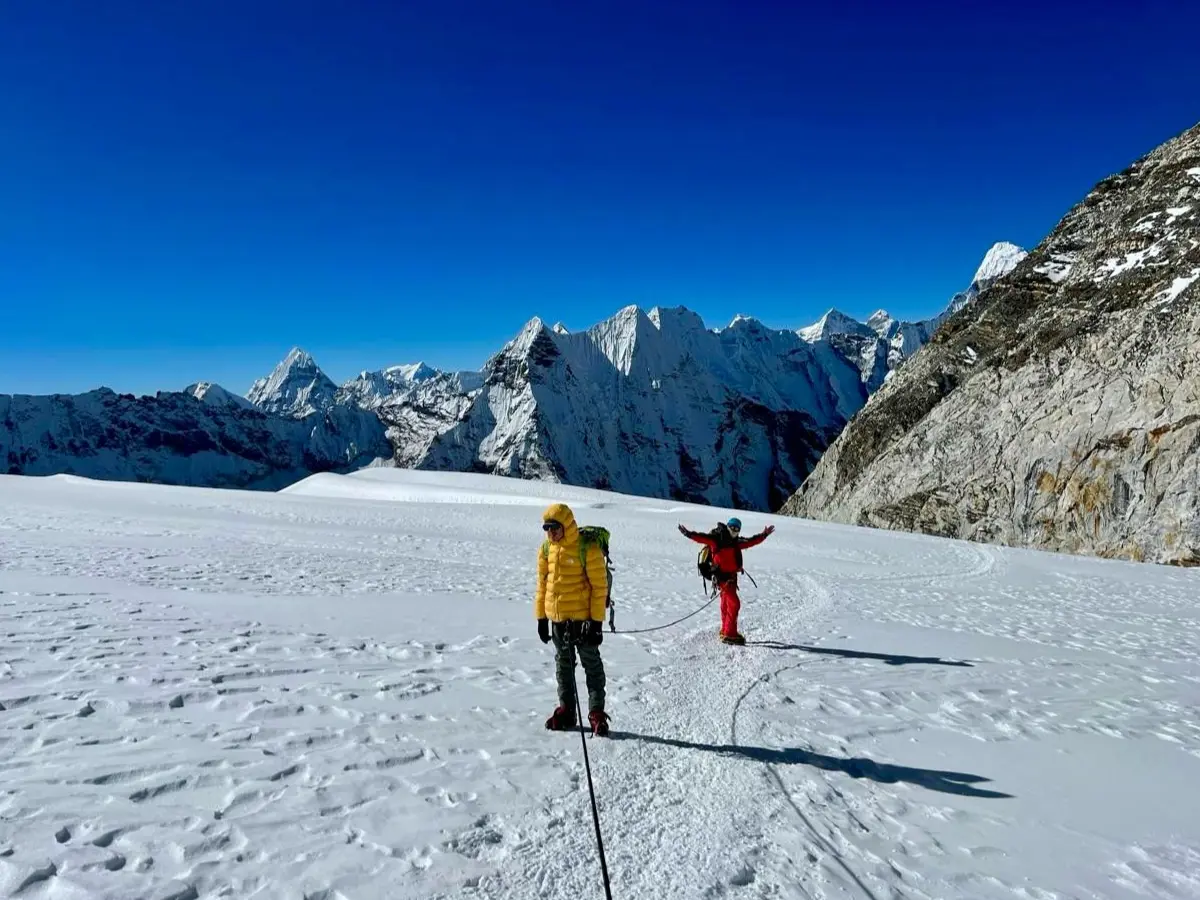
  • Traverse glaciers, learn to use fixed ropes, climb ice walls, and experience an extreme alpine environment

  • Witness beautiful landscapes and mountain vistas

  • A perfect trip for adventure lovers and individuals who want to go beyond trekking in the Himalayas

  • Sharpen your climbing skills and get ready for bigger mountains

Island Peak Climbing physical requirement and preparation:

Climbing Island Peak is physically very demanding. You will need to be physically fit for a successful summit. You will be exposed to an extreme alpine environment which deteriorates the human body and weakens it. Therefore, you should be physically and mentally ready for this climb.

To prepare effectively, we recommend starting your training at least three to four months before your trip. Your focus should be on a blend of cardiovascular endurance and muscular strength to handle the demands of high-altitude trekking. Simple, consistent activities such as hiking with a weighted backpack, trail running, or cycling are perfect for building the stamina you will need.

It is also equally important to train your lower body. Exercises like squats, lunges, and dedicated step-up drills into your routine to prepare your legs for the steep, uneven terrain of the Khumbu region. By focusing on steady, gradual progress rather than intense, last-minute effort, you will significantly improve your comfort level and have the energy to fully enjoy this once-in-a-lifetime journey.

If you have access to a specific climbing training program that teaches the basics of mountaineering, join it. The more you know about climbing and climbing gear, the more confident you will be in the mountains. Likewise, you can also read related blogs and watch YouTube videos. 

Altitude sickness and prevention:

Altitude sickness happens during high-altitude treks like Island Peak Climbing. It happens because of low oxygen levels at higher elevations, which your body is not used to.

If you do not acclimatize, you may feel uneasy or suffer from headaches, nausea, vomiting, insomnia, difficulty breathing, and dizziness. These are the early signs of altitude sickness.

If trekkers get these symptoms, they should take altitude sickness medicines. If the symptoms are not controlled even after the medicine, descending is recommended.

Our package is carefully prepared keeping proper acclimatization in priority. We trek slowly in pace to help your body be familiar to altitude gain. We also have 2 rest days for you to acclimatize properly.

You can follow the below instructions to avoid altitude sickness and acclimatize during Island Peak Climbing:

  • Ascend slowly

  • Do not rush

  • Keep yourself hydrated (drink at least two liters of water, soups, and hot teas daily)

  • Do you consume alcohol or smoke while ascending

  • Limit your caffeine intake as it can dehydrate your body

  • Have lots of food and get ample rest- be in good condition to push yourself

Why Choose Island Peak Over Other Peaks?

There are many other Peaks available to climb in Nepal like; Mera Peak, Lobuche Peak, and Pisang Peak. Compared to other peaks it is much shorter. Likewise, you will also get a taste of technical climbing, which is not possible in other trekking peaks. It is considered one of the best introductory climbing peaks in Nepal. You will get real mountaineering experience and learn to use crampons, ropes, harness, and ice axes.

Also, it was climbed first by legendary duo who also were first summiters of Mount Everest - Sir Edmund Hillary and Tenzing Norgay Sherpa. They have used Island Peak as their practice peak. So, climbing Island Peak is like being part of history.


Safety measures and emergency evacuation plan

Your safety is our priority during the Island Peak expedition. You will climb with a professional Nepali climber who has climbed Island Peak several times before and is well aware of the climbing route.

From traversing glaciers to fixing ropes and climbing ice walls, our guide will help you in every step. To this date, we have helped many climbers summit Island Peak.

During our previous expeditions, we encountered many hurdles, which made us knowledgeable of all possible scenarios and experts in handling unseen events, so you can travel without any worry.

We have a perfect acclimatization plan, and our guides are trained to provide first aid. Likewise, during an emergency, we are also capable of providing quick rescue. With us, you can travel confidently.
Island peak climbing 15 days and 14 nights Itinerary

Day 1

Arrival in Kathmandu

This day you will arrive at Tribhuvan International Airport where our staff will welcome you and transfer you to your hotel. After check-in, you can enjoy free time exploring Kathmandu's vibrant atmosphere. In the evening you will meet your guide for a detailed trip briefing and equipment check.

Max Altitude: 1300
Meals: Breakfast
Accommodation: 3* Hotel
Day 2

Fly to Lukla (2,860m) – Trek to Phakding (2,610m)

Your guide will come meet you at the Hotel and help you check out. After which you will go back to Airport to catch a flight. You will enjoy a breathtaking flight to Lukla before beginning your trek through traditional Sherpa villages and beautiful river valleys to Phakding.

You will be staying overnight in Phakding on Teahouse

Max Altitude: 2610
Meals: Breakfast, Lunch and Dinner
Duration: 35-40 min flight and 3-4 hour trek
Accommodation: Teahouse
Mode of transportation: flight
Day 3

Trek to Namche Bazaar (3,440m)

You will begin your day early and start trek to Namche Bazaar, On the way you will be crossing suspension bridges and enter Sagarmatha National Park before ascending to Namche Bazaar, the heart of the Khumbu region.

Namche Bazar is a beautiful arch shaped  town in Khumbu region. You will be spending your night here at this beautiful town.

Max Altitude: 3440
Meals: Breakfast, Lunch and Dinner
Duration: 6-7 hours
Distance: 11 km
Accommodation: Teahouse
Day 4

Acclimatization Day in Namche Bazaar

Today you will not be continuing the hiking trail, This day you will be hiking up to Everest View Hotel for magnificent views of Everest, Ama Dablam, and surrounding peaks. It will help your body adjust to the altitude.

After the hike you will gradually hike down to Namche Bazaar for continuing your trek tomorrow.

Meals: Breakfast, Lunch and Dinner
Accommodation: Teahouse
Day 5

Trek to Tengboche (3,860m)

The trek continues from this day. You will trek towards Tengboche. You will walk along scenic ridges with magnificent views of Everest, Nuptse, Lotse and Ama Dablam  before reaching the famous Tengboche Monastery. It is home to largest and important Monastry in the Everest region.

The peaceful atmosphere and stunning mountain views make Tengboche one of the highlights of the trek.

Max Altitude: 3860
Meals: Breakfast, Lunch and Dinner
Duration: 5-6 hours
Distance: 10 km
Accommodation: Teahouse
Day 6

Trek to Dingboche (4,410m)

The trail gradually descends through rhododendron forests, crossing mountain streams later on gradually ascends through traditional Shrepa settlements and alpine forests. The vegetation starts to become sparse and spectacular view of Ama Dablam completely dominates the skyline. By afternoon you will reach Dingboche.

It is a beautiful high altitude village surrounded by towering peaks. You will spend overnight at teanhouse in Dingboche.

Max Altitude: 4410
Meals: Breakfast, Lunch and Dinner
Duration: 5-6 hours
Distance: 11 km
Accommodation: Teahouse
Day 7

Acclimatization Day in Dingboche

Day 7 is another important Acclimatization day. It helps your body to adjust to the increasing altitude preventing the risks of altitude sickness. You will hike to a nearby viewpoint to witness beautiful views of surrounding Himalayan range.

You can spend rest of remaining day by resting or exploring the village.

Meals: Breakfast, Lunch and Dinner
Distance: 5 km
Accommodation: Teahouse
Day 8

Trek to Chhukung (4,730m)

Todays trek is relatively very short compared to other days. Folloning the Imja valley, you will walk through rugged alpine terrain surrounded by towering peaks. You will reach Chhukung after 3-4 hours of walking.

It serves as gateway to Island Peak and offers breathtaking views of Lotse south face and Island Peak.

Max Altitude: 4730
Meals: Breakfast, Lunch and Dinner
Duration: 3-4 hours
Distance: 5 km
Accommodation: Teahouse
Day 9

Acclimatization Day in Chhukung – Hike to Chhukung Ri (5,550m)

For better acclimatization and improve your summit success you will be having another rest day. This day you will hike to Chhukung Ri, it is known as one of the best viewpoints of Everest region. The climb is little bit challenging but will reward you with panoramic views of Everest, Lotse, Makalu, Ama Dablam, Baruntse, and Island Peak

After returning to Chhukung you will spend rest of your afternoon resting and preparing your climbing equipments.

Max Altitude: 5550
Meals: Breakfast, Lunch and Dinner
Duration: 4-5 hours
Distance: 6 km
Accommodation: Teahouse
Day 10

Trek to Island Peak Base Camp (5,200m) – Climbing Training

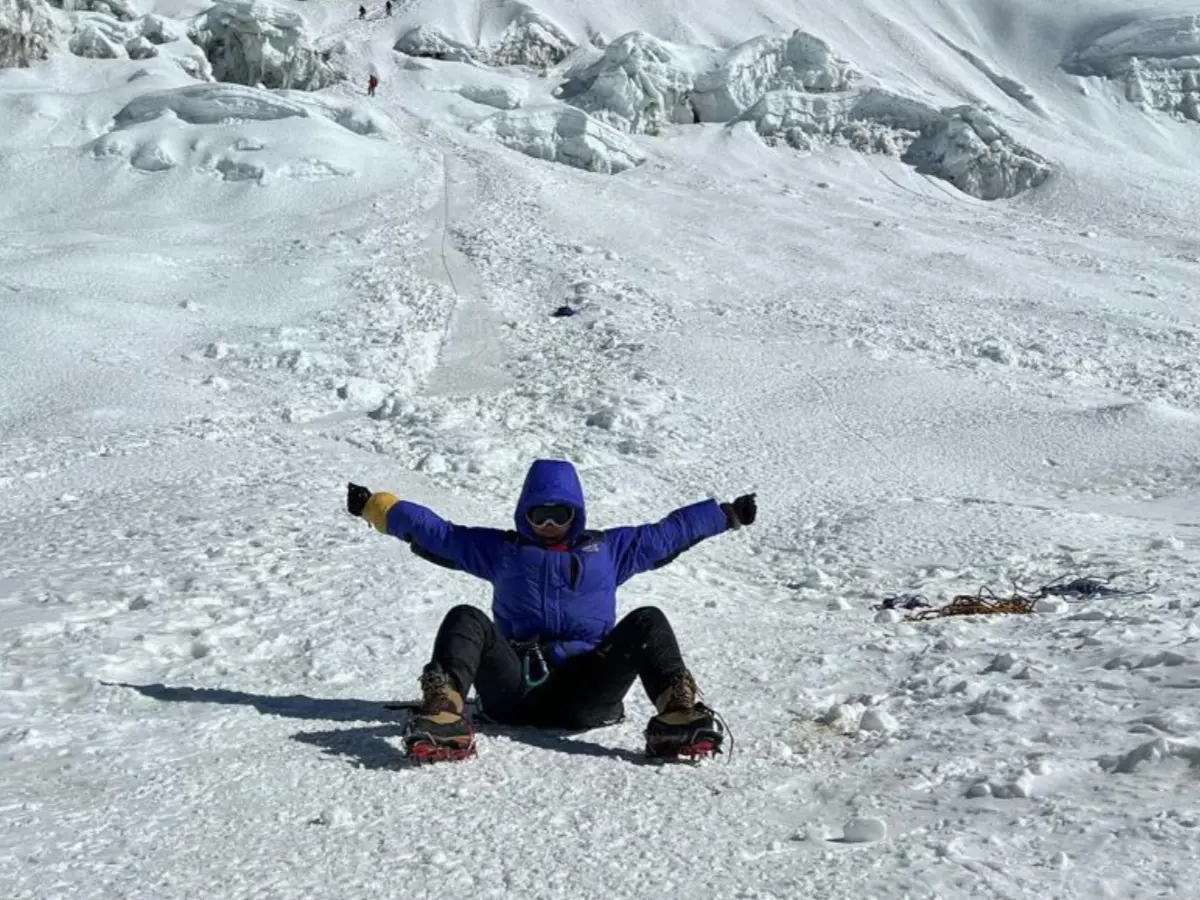
Leaving Chhukung , the trail gradually ascends toward Island Peak Base Camp. Upon arrival, our team will setup camp and provide you with comprehensive training session covering the use of climbing equipments including harness, crampons, ropes, ice axes and ascenders.

This preparation will greatly increase your confidence and safety for the summit day tomorrow.

Max Altitude: 5200
Meals: Breakfast, Lunch and Dinner
Duration: 3-4 hours
Distance: 5 km
Accommodation: Teahouse
Day 11

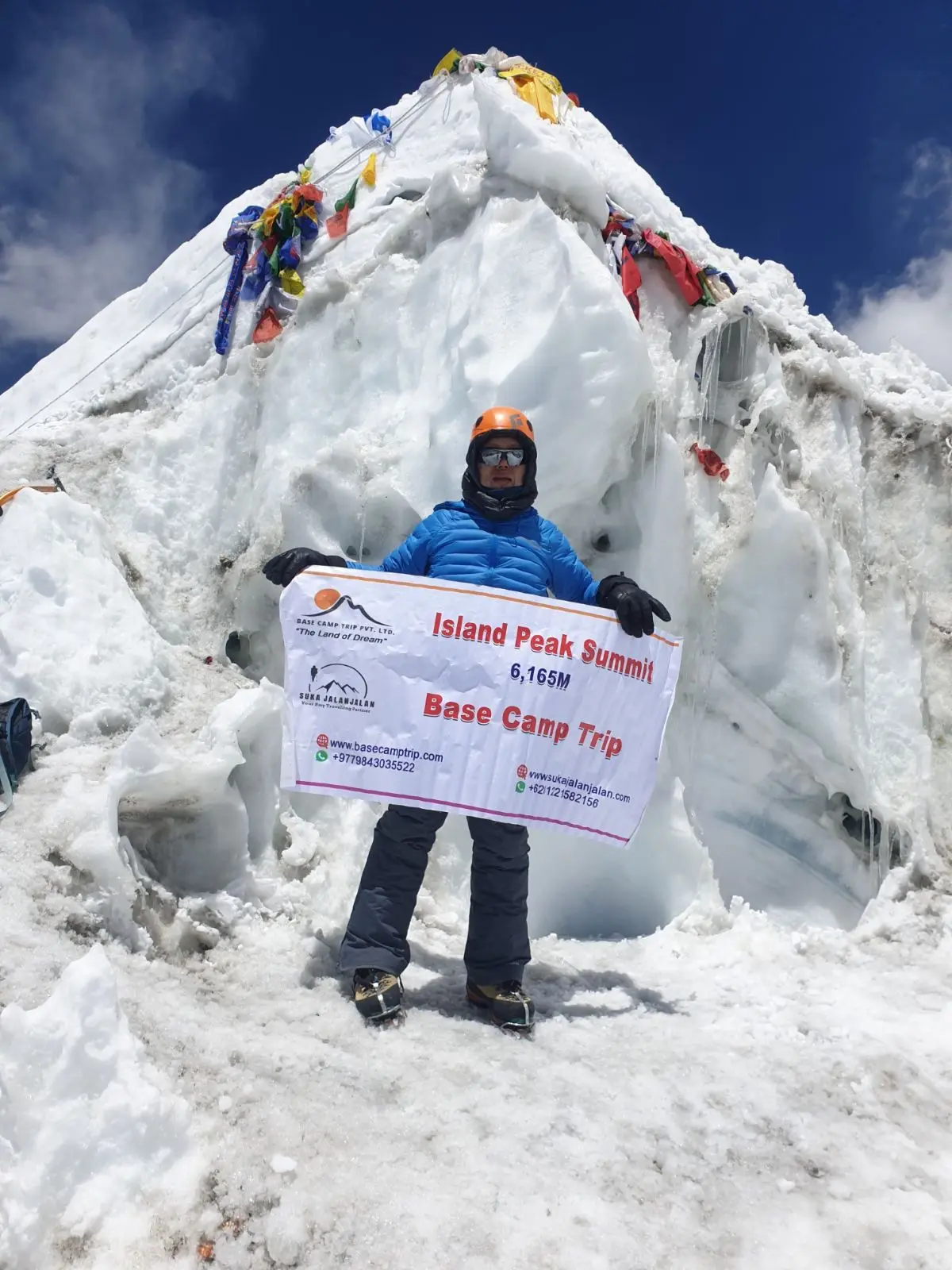
Summit Island Peak (6,189m) – Return to Chhukung

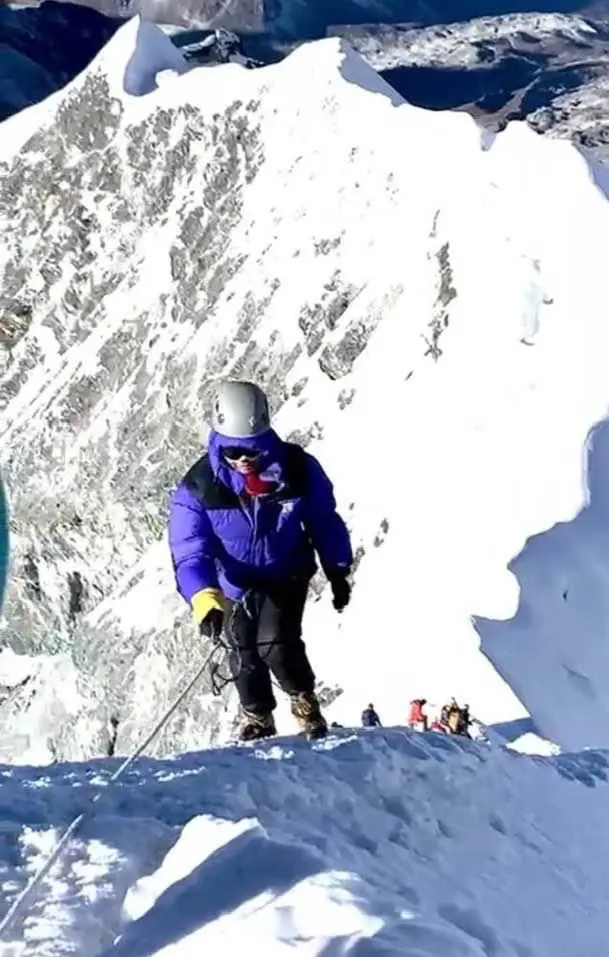
Today is the most exciting and rewarding day of the expedition. The climb begins before dawn, you will follow rocky paths and glacier terrain towards the summit. You will be using fixed ropes and climbing equipments to navigate safely during the final sections of the summit.

Reaching the summit feels truly joyful. You will get unforgettable panoramic views of Everest, Lotse, , Nuptse, Ama Dablam, , Makalu, Baruntse, and countless himalayan peaks.

After spending some time at Summit and celebrating your achievement, you will descend carefully back to Base Camp and cotinue to Chhukurung for your well-deserved rest.

Max Altitude: 6189
Meals: Breakfast, Lunch and Dinner
Duration: 10-12 hours
Distance: 12 km
Accommodation: Teahouse
Day 12

Trek to Namche Bazaar

With the successful summit you will  begin your descend through Dingboche, Pangboche, and Tengboche while enjoying lower elevations and comfortable surroundings. The lower altitude and comfortable surrounding provide an excellent opportunity to relax and celebrate your climbing success.

Meals: Breakfast,Lunch and Dinner
Duration: 7-8 hours
Distance: 21 km
Accommodation: Teahouse
Day 13

Trek to Lukla

The final trekking day follows the similar trekking route. You wil descend through forests, villages and cross suspension bridges back to Lukla. 

In the evening you will enjoy a farewell dinner with your porters and climbing team to celebrate your successful completion of your Island Peak adventure.

Meals: Breakfast, Lunch and Dinner
Duration: 6-7 hours
Distance: 19 km
Accommodation: Teahouse
Day 14

Fly Back to Kathmandu

You will take an early morning flight from Lukla to Kathmandu. Our team will be ready at the airport to transfer you back to the hotel. You can spend rest of the day exploring and roaming in Kathmandu, shopping souvenirs. Our team will meet you again for farewell dinner and provide you with the certificate of successful climb.

Meals: Breakfast, Lunch and Dinner
Accommodation: Hotel
Day 15

Final Departure

After Breakfast, our staff will transfer you to Tribhuvan International Airport for your onward flight. You will depart Nepal with unforgettable memories of Everest Region and incredible accomplishment of summiting Island Peak.

We hope to welcome you back to Nepal again for your next adventure in future.

Meals: Breakfast
Still Confuse?
No worries — we’re here to help. Whether you have questions or just need a bit more clarity, feel free to reach out. Our team is ready to guide you every step of the way.

Essential Information

Best Time for Island Peak Climb:

Spring Season (March to May)

Spring is one of the most popular times for Island Peak Climbing due to stable weather, moderate temperatures, and excellent mountain visibility.

Autumn Season (September to November)

Autumn offers crystal-clear skies, dry conditions, and some of the best climbing weather in the Himalayas.

Both seasons provide excellent opportunities for a successful summit.

Summit in winter is also posible but with extra caution and preparation.


Accommodation:

In Kathmandu, you will stay in a three-star hotel. We will book the hotel according to our itinerary, and additional stay will cost you extra money. During trekking you will be staying in Teahouses overnight.

In the basic Teahouses, rooms are small and shared between two trekkers, western style toilets are also commonly found.

If you want better service, you can upgrade to luxury lodges available in Lukla, Phakding, Namche Bazaar, Tengboche and Dingboche. 

Likewise, in Island Peak Base Camp, we wil set up alpine grade tents to rest. Our team members will prepare and cook meals for you.

Meals on trek:

Our Island Peak Climbing package only includes Breakfast in Kathmandu, otherwise you will have 3 time meal Breakfast, Lunch and Dinner which are all included in our Package. If you desire to eat as not included in our package then the cost should be beared by yourself.

During trekking you will have meals in lodges. Some of the faviourates among climber are; Dal bhaat, Thukpa, stew, fried rice. These are filling, easy to eat, delicious, and perfectly balanced daily nutrition intake.

You are also free to enjoy other options available in lodges such as; Mo:Mo, thenduk, Tibetan bread, paratha, curries, nonveg dishes, eggs, and pasta.

At the Island Peak Base Camp, our staff members will be the one cooking and preparing healthy and nutritious food for you.

Lukla flights:

Over the years, many changes have been made to the Luka flights to provide the safest flights to the trekkers. One of the major changes was shifting the Lukla flight to Ramechhap Airport from Kathmandu Airport, which is located around 4 to 5 hours away from Kathmandu city.

However, the Lukla flights are only operated from Ramechhap Airport between March and May and September and November, when the air traffic is very high at the Kathmandu Airport.

We will let you know in advance from which airport you will take Lukla's flight. If the flight is operated from Ramechhap Airport, you will leave your hotel at 1:00 AM or 2:00 AM to make it to the airport on time. The flight from both airports will be short and scenic.

Travel Insurance:

Travel insurance is important for booking Island Peak climbing or any expedition in Nepal. It must cover helicopter evacuation and medical bills. Please make sure your travel insurance covers evacuation for peak climbing in the Himalayas.

Visa:

Foreigners, except Indians, require a travel visa to enter Nepal for peak climbing. The Nepal travel visa is easily available for travelers from many countries at Tribhuvan International Airport. Keep the required documents and visa fee ready on hand for a quick process.

Please check your country's visa eligibility for Nepal and get your visa accordingly. You have to pay the visa fee by yourself. Base Camp Trip is not responsible for obtaining a Nepal travel visa. 

Island Peak Climbing Packing list:

We have made an Island Peak Climbing Packing list by the help of an active mountaineer for your packaging convenience. The following listed things are which you are required to pack.

Head & Hand 

  • Balaclava 

  • Neck Gaiter/High Neck

  • Sun Cap 

  • Wool/Fleece Hat 

  • Lightweight Synthetic Liner Glove 

  • Wind Stopper Fleece Gloves 

  • Heavy Gloves (Mitten) 

Upper Body 

  • Midweight Top 

  • Synthetic or Fleece Jacket 

  • Short-Sleeved Shirts/T-shirts 

  • Lightweight Top/Thermo Coat  

  • Down Insulated Jacket 

  • Gore-Tex Jacket

Lower Body 

  • Underwear

  • Trekking Pants 

  • Synthetic Insulated Pants 

  • Lightweight Long Underpants  

  • Midweight Long Underpants 

  • Gore-Tex Pants 

  • Trekking & Climbing Socks 

  • Summit Socks 

Technical Devices/Climbing Gears 

  • Climbing Helmet 

  • Headlamp with Spare Batteries (Petzl/BD) 

  • Ice Axe Semi-technical 

  • Harness 

  • Carabiners (Both Lock & Unlock) 

  • Ascenders/Jumar

  • Belay Device (ATC Guide/Figure of 8) 

  • Assistant Rope 

  • Tape Sling 

  • Ice Screw

  • Summit Boot/G2SM 

  • Crampons 

  • 1 Sleeping Bag: -30 +C to -40 +C 

  • Thermarest Cell Foam Mattress 

  • Sun/Glacier Glasses UV Protection 

  • Snow Goggle UV Protection 

  • Extendable Trekking Poles (BD Alpine Flz) 

First Aid Kit 

  • Sunscreen (-50 Spf) 

  • Lips Guard (-20/-50 Spf) 

  • Water Purification Tablets 

  • Baby Wipes or Wet Towels 

  • Handy Plaster 

  • Crack Bandage 

  • Tincture 

  • Lodine 

  • Strepsils 

  • Antibiotic 

  • Paracetamol 

  • Aspirin 

  • Sinex 

  • Anti-Diarrhea Capsule/Eldoper 

  • Brufen/Ibuprofens 

  • Diamox 

  • Eye Drops 

  • Zip-Lock Bags

Toiletries 

  • Hand Sanitizers & Hand wash 

  • Wet Tissues 

  • Toothpaste 

  • Toothbrush 

  • Bath Soap 

  • Shampoo

  • Moisturizers  

  • Laundry Soap 

  • Garbage Bag 

Miscellaneous

  • Swiss Knife 

  • Sandals 

  • Lightweight Hiking/Trekking Boots 

  • Camp Booties

  • Rucksacks (45 - 55 Ltr.) 

  • 1 Duffel Bag 

  • Water Bottles 

  • Thermos/Flask 

  • Pee Bottle 

  • Pack Towel  

  • Umbrella/RainCoat 

  • Spare batteries 

  • Waterproof Stuff Sacks 

  • Satellite Phone (if possible)

  • Solar chargeable power bank (optional)

  • Journal/Pen

  • Book/Board Game

  • Bars & Snacks

Travel Documents 

  • 4 PP Size Photo 

  • Valid Passport (at least six months of validity from the date you enter Nepal)

  • Valid Visa 

  • Insurance Paper (Medical & Rescue) & Contact Address 

  • Family/Company Contact Number & Address 

  • Credit Card

FAQs

Do I need previous climbing experience for Island Peak?

Previous climbing experience is helpful but not mandatory. Many climbers successfully summit Island Peak as their first Himalayan peak. Our experienced climbing guides provide training at Base Camp on the use of crampons, harnesses, ropes, ascenders, and other climbing equipment.

What permits are required for Island Peak Climbing?

Climbers need the following permits:

  • Island Peak Climbing Permit
  • Sagarmatha National Park Entry Permit
  • Khumbu Pasang Lhamu Rural Municipality Permit

These permits are all arranged by us. So, theres no worry about any permits.

Do I need to bring my own climbing equipment?

You should bring personal trekking gear such as clothing, boots. Other necessary equipments like sleeping bag, harness, ince axe, ceampons, helmet etc will be provided for you here in Kathmndu by us.

What is the success rate for Island Peak Climbing?

The success rate is high when climbers are properly acclimatized, physically prepared, and guided by our experienced climbing professionals. Weather conditions and individual fitness can influence summit success.

Is travel insurance required for Island Peak Climbing?

Yes, comprehensive travel insurance that covers high-altitude trekking, peak climbing, medical treatment, and emergency helicopter evacuation is strongly recommended.

What are the major mountains visible from the summit?

From the summit of Island Peak, climbers enjoy spectacular views of Mount Everest, Lhotse, Nuptse, Makalu, Ama Dablam, Baruntse, and many other Himalayan peaks.

Are guides and porters included in the package?

Yes, our Island Peak Climbing packages include experienced licensed trekking guides, professional climbing guides, and porter support to assist you throughout the expedition.

How much weight can a porter carry?

Typically, one porter carries up to 20–25 kg of luggage shared between two trekkers. Clients are usually advised to keep their duffel bag weight within 12 kg.

Can I charge my electronic devices during the trek?

Yes, most tea houses offer charging facilities for an additional fee. However, charging options become more limited at higher elevations, so carrying a power bank is recommended.


What is the biggest challenge during Island Peak Climbing?

The biggest challenges are the high altitude, long summit day, and cold temperatures. The final ascent involves glacier travel, fixed ropes, and a steep climb to the summit ridge, making physical endurance and mental determination essential.

How cold does it get on Island Peak?

Temperatures vary depending on the season. During summit day, temperatures can drop below -10°C to -20°C, especially before sunrise. Proper layering and quality cold-weather gear are essential.

What happens if I cannot reach the summit?

Safety always comes first. If weather conditions, altitude sickness, or physical condition make a summit attempt unsafe, your guide may recommend turning back. While reaching the summit is the goal, returning safely is always the priority.

Is helicopter evacuation available in emergencies?

Yes. In case of a serious medical emergency, helicopter evacuation can be arranged, provided the client has appropriate travel insurance covering high-altitude rescue.

Are there age restrictions for Island Peak Climbing?

There is no strict age limit, but climbers should be physically fit and capable of handling high-altitude trekking and climbing. Most participants are between 18 and 65 years old.

Customize
Download