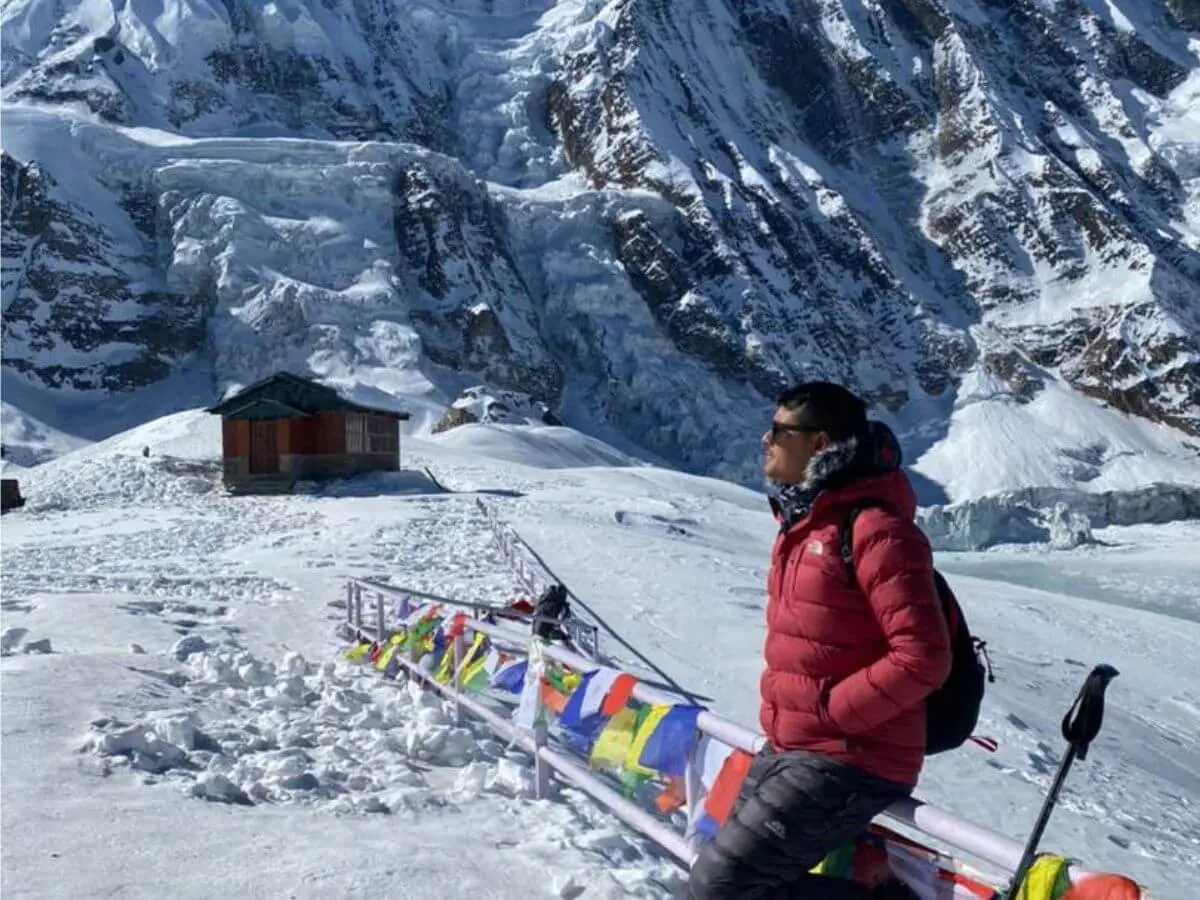
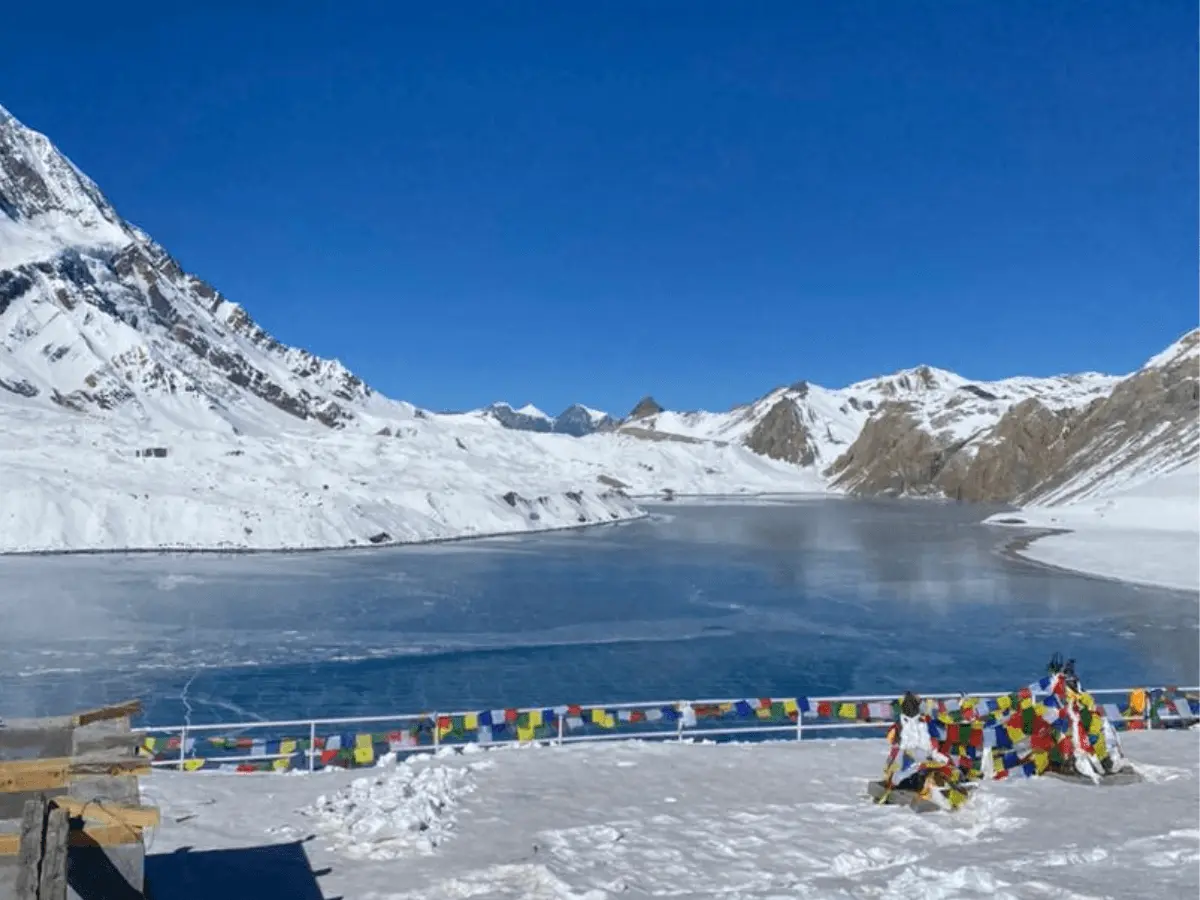
Tilicho Lake Trek – 9 Days

Duration
9 Days
Trip Grade
Moderate
Maximum Altitude
4140
Starts
Kathmandu
Ends
Kathmandu
Group Size
1-12
Activities
Trekking & Hike
Best Time
Spring and Autumn
Country
Nepal

Tilicho Lake Highlights

  • One of the world's highest lakes at more than 4,900m above sea level
  • Breathtaking turquoise blue lake with snow-capped mountains
  • Situated in the gorgeous Tilicho Lake in the Annapurna Conservation Area
  • Stunning views from lush valleys to alpine deserts
  • Stunning views of high peaks such as the Annapurna range, Gangapurna, and Tilicho Peak
  • A less crowded and quieter trekking route than other popular trekking trails
  • Part of the Annapurna Circuit trekking route
  • Cultural immersion in villages such as Manang and Khangsar
  • Tibetan-influenced culture, monasteries, and hospitality
  • Adventurous high-altitude trek with beautiful views
  • A chance to explore the Himalayan wilderness and peace
  • Perfect choice for adventure and beauty seekers
  • Spring (flowers) and autumn (clear) are ideal seasons for views
  • Unique combination of religious, cultural, and natural experiences
  • A trekking destination on every Himalaya enthusiast's bucket list

Overview of Tilicho Lake

Tilicho Lake is the most amazing high-altitude tourist spot in Nepal, situated in the Annapurna region at an elevation above 4,900 meters. The lake is regarded as one of the highest lakes in the world and is known for its deep blue waters and mountain scenery. Its remote place and natural, wonderful environment have made it a dream destination among the trekkers who want adventure and the beauty of the Himalayas.

The expedition to Tilicho Lake is an amazing experience of different landscapes: green forests and old villages of the mountains and the wild Alps. As trekkers climb up the mountain, they are rewarded with breathtaking scenery of snow-capped mountains and serene natural landscapes. The breathtaking scenery, coupled with the difficulty of trekking at high altitude, makes Tilicho Lake a big attraction to adventure seekers in Nepal.

In addition to its picturesque nature, Tilicho Lake is appreciated due to the feeling of tranquility and solitude that it provides. Unlike crowded cities, the lake gives tourists an opportunity to get in touch with nature in a peaceful and tranquil setting. The pristine beauty, the crystal water, and the scenic mountainous backdrop make the experience of Tilicho Lake a sight to behold and a revitalizing experience for the soul and body; hence, it is one of the most memorable trekking sites in the Annapurna region.

To enjoy this wonderful adventure without any problems and professional assistance, the trekkers can book their adventure at Suka Jalanjalan—your easy travelling partner. The Suka Jalanjalan offers well-guided and well-planned itineraries together with local support to make the Tilicho Lake trek easy, entertaining, and memorable for the traveler who wants to view the beauty of the Himalayas.

Routes to Tilicho Trek

The Tilicho Trek starts with a Kathmandu drive to Besisahar, a 7-8 hour trip along the hilly roads of central Nepal. As you move out of the busy capital, the scenery slowly changes to terraced farmlands, river valleys, and small villages on the roadside, giving you a glimpse of life in rural Nepal. The main base point of access to treks in the Annapurna region is Besisahar, the headquarters of Lamjung District, and where most trekkers stay overnight before venturing further into the mountains.

At Besisahar, the road is followed by a jeep or a local vehicle along a meandering, unsurfaced mountain path to Manang. Although this road is rough and adventurous on its own terms, it traverses several interesting villages such as Chame, Pisang, and Humde that are all breathtaking in terms of the scenery they command of the Annapurna and Lamjung Himal ranges. Manang, the elevation of which is approximately 3,500 meters, is a high-altitude village full of life and a major acclimatization point. The majority of trekkers stay at least one or two nights here to give their bodies time to acclimatize before proceeding to greater altitudes.

At Manang, the path to Tilicho Base Camp earnestly starts. This part of the trail is regarded as one of the most picturesque and difficult portions of the whole trail, traversing narrow ridges, glacial moraines, and high-altitude meadowlands with extensive vistas of the surrounding mountains. It requires a fair degree of fitness, and the uncivilized splendor of the Annapurna wild more than offsets the effort. Tilicho Base Camp, which is located at about 4,150 meters, is where trekkers stay and gear up for the final climb to the lake the next morning.

The climax of the whole trip is on the day when you climb to base camp, up to Tilicho Lake, which is one of the highest lakes in the world, at 4,900 meters high. The deep blue waters of the lake, with a background of snow-capped mountains and rocky ridges, form a picture that is indeed memorable. Once the opinions have been absorbed, trekkers then move down to Khansagar, a less busy village where one can get transport back to Besisahar. What a wonderful adventure it is, and what lasting recollections the trekkers will have of one of Nepal's most spectacular high-altitude destinations! The final drive back to Kathmandu is made out of Besisahar.

Cultural Significance of Tilicho Lake

Tilicho Lake is culturally and religiously important, as it is linked with the Kak Bhusundi Lake, referred to in the ancient Hindu epic of the Ramayana. Hindus believe that the sage Kak Bhusundi recited the Ramayana to Garuda in this holy place, which gave the lake a significant spiritual identity. This mythological connection has rendered Tilicho Lake a sacred place for Hindu pilgrims who come to the region to find spiritual and natural experiences.

Both the Hindus and the Buddhists believe that the lake is sacred, which makes it a significant religious site in the Himalayan region. The lake is considered sacred by Hindu followers due to its connection to ancient myths, and it is a place of meditation and spirituality for Buddhists. The similarity in reverence by both religions underscores the harmony that can be traced in the culture of Nepal in its mountainous areas, where natural features commonly hold strong religious connotations for various communities.

Another spiritual importance of Tilicho Lake in Buddhist tradition is that the saint Milarepa is believed to have meditated at the lake. The untouched nature and quiet mountains that surround the Tilicho Lake make it a holy place that evokes contemplation and prayer. Such a blend of spiritual significance and natural calmness makes Tilicho Lake not merely a beautiful walk but a spiritual and cultural one as well.

Tilicho Lake Trek – 9 Days Itinerary

Day 1

Day 01: Arrival in Kathmandu, escorted to the hotel

This trip starts when you land in Kathmandu, where you are received with a warm welcome and taken to your hotel. Kathmandu is a colorful entry point to Nepal, situated at an altitude of approximately 1,300 meters, with its cultural ambience and busy streets. The day is also the time to rest and prepare after your flight, and trekkers can rewind and prepare to enjoy the adventure that awaits them. You will spend the night in Kathmandu in a nice hotel.

Max Altitude: 1300
Meals: Null
Accommodation: Hotel
Day 2

Drive from Kathmandu to Besisahar

On the second day, you start your trip with a beautiful drive from Kathmandu to Besisahar. As you leave the city, the drive takes you through beautiful landscapes, rivers, and terraced hillsides. Besisahar is the entrance to the Annapurna region and is at an elevation of approximately 807 meters. Once there, you camp down in a teahouse at night and have dinner.

Max Altitude: 807
Meals: Breakfast, Lunch & Dinner
Accommodation: Tea House
Day 3

Drive by Jeep from Besisahar to Manang

The adventure then proceeds into a jeep ride between Besisahar and Manang and into a dramatic ascent high into the Himalayas. When the elevation increases to approximately 3,519 meters, the terrain turns into mountainous terrain and an alpine appearance. The exciting trip takes you far into the Annapurna area, and you spend the night in a tea house in Manang, where one is fully engrossed in the mountain atmosphere.

Max Altitude: 3519
Meals: Breakfast, Lunch & Dinner
Accommodation: Tea House
Day 4

Acclimatisation day in Manang: Hiking visit to Gangapurna Lake

This day is devoted to acclimatization in Manang, which is necessary to get used to the higher altitudes. Trekking is a hike of short duration to the Gangapurna Lake, which is beautiful, and the trekkers stay at an altitude of about 3,534 meters. This assists the body to become accustomed to the thinner air, and the chances of altitude sickness are minimized. Following the hike, you go back to Manang, where you spend the night in a tea house having full meals.

Max Altitude: 3534
Meals: Breakfast, Lunch & Dinner
Accommodation: Tea House
Day 5

Trek from Manang to Tilicho Basecamp

On this day, the walk is even harder because you will be climbing up Manang to Tilicho Base Camp at an elevation of nearly 4,140 meters. It is a trail of rugged terrain and high mountain landscapes with breathtaking views along the trail. The elevation is higher, and thus the air is thinner; hence, a slow pace is significant. You spend the night at Tilicho Base Camp in a tea house.

Max Altitude: 4140
Meals: Breakfast, Lunch & Dinner
Accommodation: Tea House
Day 6

Early morning Hike from Tilicho Basecamp to Tilicho Lake

One of the first hikes to be undertaken is an early morning walk through Tilicho Base Camp to the beautiful Tilicho Lake, where you get to observe one of the highest lakes in the world, with the dramatic Himalayan mountains enclosing it. This is after you spend some time in the lake, after which you descend heading towards Khangsar. This day consists of both uphill and downhill and is a strenuous task that is very fulfilling. You spend the night at a tea house in Khangsar.

Max Altitude: 4140
Meals: Breakfast, Lunch & Dinner
Accommodation: Tea House
Day 7

Drive from Khangsar to Besisahar

Having taken the high-altitude part of the expedition, you start your bringing-back trip with a ride over Khangsar to Besisahar. The descent provides an opportunity to rest and go through the trekking experience again as the scenery slowly turns to lower hills. When you get there, you spend the night in a teahouse and eat after the long drive.

Meals: Breakfast, Lunch & Dinner
Accommodation: Tea House
Day 8

Drive from Besisahar to Kathmandu

On this day, you will ride back to Kathmandu, following the picturesque road through hills and rivers, in the same direction as Besisahar. The drive will lead you to the capital city, where you will be able to stay more comfortably in a hotel. This coming back after days of trekking in the mountains is the change of life from the trekking to the comfort of the city.

Meals: Breakfast, Lunch & Dinner
Accommodation: Hotel
Day 9

Departure

Your trip ends with leaving Kathmandu. You are then taken to the airport after breakfast and taken to your next destination. This is the culmination of your memorable experience at Tilicho Lake, and you are only left with unforgettable memories of the Himalayas, culture, and the experience of trekking.

Meals: Breakfast
Accommodation: Hotel
Still Confuse?
No worries — we’re here to help. Whether you have questions or just need a bit more clarity, feel free to reach out. Our team is ready to guide you every step of the way.

Cost Details

Includes

  • Airport pickup and drop-off in Kathmandu
  • Transportation from Kathmandu to Besisahar
  • Jeep drive from Besisahar to Manang
  • Return transportation from Besisahar to Kathmandu
  • Hotel accommodation in Kathmandu
  • Tea house accommodation during the trek
  • Breakfast, lunch, and dinner during trekking days
  • Annapurna Conservation Area Permit (ACAP)
  • Trekkers' Information Management System (TIMS Card)
  • Experienced trekking guide
  • Guide’s salary, meals, accommodation, and insurance
  • Basic first aid support during the trek
  • Government taxes and service charges

Excludes

  • International airfare to and from Nepal
  • Nepal entry visa fees
  • Personal travel insurance
  • Emergency rescue and evacuation costs
  • Personal trekking gear and equipment
  • Hot showers during the trek
  • Wi-Fi and battery charging fees
  • Soft drinks, bottled water, and snacks
  • Laundry and personal expenses
  • Tips for the guide and porter
  • Extra hotel nights in Kathmandu due to delays
  • Any additional costs caused by weather, landslides, or itinerary changes

Essential Information

Best season to visit Tilicho Lake

Spring Season (March-May)

Tilicho Lake should be visited during the spring season, as temperatures are relatively moderate and trekking is comfortable. The trails are flanked by rhododendron forests, which are in bloom during this period, giving the journey bright colors. The climate is always predictable, and thus, trekkers can comfortably appreciate the picturesque scenes and serene nature.

Autumn Season (September-November)

Autumn is said to be the most desirable season for hiking to Tilicho Lake. The monsoon gives way to clear skies, which offer breathtaking scenery of the Annapurna range and other nearby mountains. The paths are dry, the climate is stable, and it is ideal to do high-altitude trekking. This is the most preferred season, even though it may be busy, but the visibility and the conducive conditions make it the best season for most trekkers.

Winter and Monsoon (Off-Seasons)

Tilicho Lake is not normally very favorable to visit in winter or the monsoon. During the winter, the snow and extremely low temperatures can make the trek difficult and dangerous. Trails can get very slippery during monsoon season, and the probability of landslides is also increased. These factors may influence the safety and visibility, complicating trekking.

Permits required for Tilicho Lake

Trekking to Tilicho Lake requires trekkers to acquire the Annapurna Conservation Area Permit (ACAP). This permit is essential to access the Annapurna Conservation Area, and it assists in the conservation of the environment and also the local communities in the area.

Information Management System (TIMS) Card of Trekkers.

The Information Management System (TIMS) card is another key requirement of the Trekkers. This card is used to monitor the trekkers and ensure their safety, and it is scanned at various stages of the route. It is significant in making the trekking experience safer.

Where to Get Permits?

The two trekking permits needed for Tilicho Lake can be acquired either in Kathmandu or Pokhara before the trek. They should be set ahead of time so that there is no time wastage when on the trek. With all the required permits, it is guaranteed that the trekking experience will be smooth and well-organized.

Documents required for Tilicho Lake

Valid Passport Copy

To walk to Tilicho Lake, trekkers are required to bring with them a copy of their passport as part of the permit application submission. It is identified by the use of a passport when purchasing trekking permits like the ACAP and TIMS cards. Both the original passport and some photocopies are suggested to be carried along during the trek in order to verify them.

Passport-Sized Photographs

Trekking permits for Tilicho Lake also require passport-sized photographs during the application. These are the photos that are normally required in the information management system card of the trekkers and other registration processes. It is advisable to carry extra copies in case more documentation is needed.

Travel Insurance Documents

Trekking to Tilicho Lake also highly encourages the use of travel insurance documents, particularly since the trek to the lake is at high altitudes and may entail some harsh weather conditions. Emergency medical treatment insurance and helicopter evacuation insurance are especially valuable. Good insurance documentation is an added security and comfort when traveling.

Difficulty of Tilicho Lake 

The journey to Tilicho Lake is an enjoyable adventure, though it is said to be one of the more difficult trekking trails in the Annapurna region. The trek is demanding in physical stamina alongside adequate preparation because of the altitude, steep mountain trails, and rough terrain. Although the spectacular scenery is worth the journey, trekkers must know its difficulties at the beginning of the trek.

Challenging High-Altitude Trek

The high altitude is one of the major challenges of trekking to Tilicho Lake. The lake is located at an altitude of 4,900 meters above sea level, where oxygen is significantly less than at lower altitudes. This can render walking strenuous and can heighten the chance of altitude sickness. Trekkers usually have to walk slowly and allow their bodies sufficient time to adapt to the altitude.

Rough Paths and Cliffy Edges.

The road to Tilicho Lake consists of rocky roads, narrow tracks, and steep grades, particularly around Tilicho Base Camp and on the last climb to the lake. These are physically demanding areas and need special care when stepping as well, especially during bad weather conditions. The uneven ground is tedious, and the trek is harder than the normal low-altitude treks.

The significance of preparation and acclimatization.

The completion of the Tilicho Lake trek requires good physical fitness and adequate acclimatization. Trekkers need to prepare beforehand with simple endurance training and take adequate time during the trek to get accustomed to the altitude. The risks can be significantly decreased by drinking plenty of water, maintaining a moderate pace, and taking acclimatization days. The difficult trip to Tilicho Lake can be a great trekking experience with the appropriate preparations.

Altitude Sickness during Tilicho Lake Trip

A trip to Tilicho Lake is a fantastic Himalayan adventure; however, due to the high altitude of the lake, altitude sickness is one of the most crucial dangers trekkers should be aware of. At an altitude of over 4,900 m above sea level, Tilicho Lake is in an area where the air has significantly less oxygen than the air at lower altitudes. As trekkers increase in altitude, the body might not adapt to the less dense air, and this causes the effects of altitude sickness. This is relevant to every person, no matter what age or fitness level, so it is crucial to be aware and prepared in advance to have a safe journey.

Altitude sickness, or acute mountain sickness (AMS), typically starts with mild symptoms of headache, dizziness, tiredness, nausea, shortness of breath, and loss of appetite. These are symptoms that are common when trekkers climb too fast without allowing the body time to acclimatize. The symptoms might be observed during the trip to Tilicho Lake, after Manang has been surpassed, and the trekkers are heading to Tilicho Base Camp. The mild symptoms observed may deteriorate and cause the trek to be life-threatening, and as such, the body should be closely monitored during the trip.

Why Does Altitude Sickness Happen?

The reason behind the occurrence of altitude sickness is that the body gets less oxygen when it is at high altitudes. The more the trekking path ascends to Tilicho Lake, the lower the air pressure will be, and the body will find it difficult to operate normally. It takes time to adapt to such changes, but when trekkers climb too fast, the body will fail to adapt fast. This is the reason why mountainous places such as Tilicho Lake would need a slower trekking speed and acclimatization.

Symptoms to be aware of.

When doing the Tilicho Lake trek, trekkers must know the prevalent symptoms of altitude sickness. These are headache, fatigue, dizziness, nausea, vomiting, sleeping difficulties, and shortness of breath. Other trekkers might become uninterested in eating, or they might experience abnormal weakness. The symptoms may be different depending on the individual, but it is very important to identify them at the earliest. Ignoring symptoms and proceeding to climb may put one at risk of developing more severe altitude-related illnesses.

Importance of Acclimatization

One of the best methods to prevent altitude sickness during the trek to Tilicho Lake is acclimatization. Taking more time at the important stops like Manang enables the body to take time to adapt slowly to the rising altitude. Rest days enhance oxygenation and lessen the body's physical strain. Trekkers who allow enough time to acclimatize normally enjoy a safer and more comfortable trip than those who rush to high altitudes.

Advice on how to avoid altitude sickness.

Trekking can be done with several precautions to minimize the risk of altitude sickness. Some of the most significant preventive measures include walking, drinking a lot of water, eating healthy food, and avoiding the use of alcohol. Maintaining a constant pace and not overworking on climbing steep hills is also beneficial. These are just a few habits that enable the body to become more acclimatized to the high altitude and enhance the safety of trekking in general.

When to Descend

When the effects of altitude sickness are too serious, the best thing to do is to descend to a lower altitude. These are warning signs like severe headache, vomiting, confusion, extreme weakness, or difficulty breathing, which should never be overlooked. It can be risky to continue climbing when you are having severe symptoms. Sooner or later, a resand and downhill may be needed to avoid complications. It should always be safe before getting to the destination.

Through correct acclimatization and good pacing and monitoring of symptoms, the majority of trekkers can successfully arrive at Tilicho Lake. Altitude sickness is a very serious problem in this high-altitude trek, but it can be significantly minimized by proper preparation. Trekking to the Tilicho Lake and experiencing the beautiful landscape of the lake can be done without any trouble, and trekkers can spend all the time enjoying the wonderful scenery of the lake while being quite safe on their way.

Equipment List for Tilicho Lake Trip

To have a safe and comfortable trip to Tilicho Lake, it is necessary to prepare the necessary equipment. As the trek has high altitudes and traverses through diverse mountainous landscapes, the gear of trekkers must be able to cope with fluctuating weather, low temperatures, and lengthy walking days. Bringing the appropriate gear not only enhances comfort but also aids in safety during the trek.

Clothing for High-Altitude Weather 

The Tilicho Lake trek needs layered clothing due to the rapid variation in temperatures between warm days and nights, which may be freezing. Moisture-wicking base layers, warm fleece jackets, insulated outerwear, and a waterproof jacket are some of the things trekkers should carry to keep warm during cold winds and changes in weather. It is also required to have thermal clothes, gloves, warm socks, a woolen hat, and a sun hat so as to be comfortable in the cold mornings, as well as when it is hot in the afternoons.

Shoes and outdoor clothing.

The trekking boots are among the most significant things that one will need in the Tilicho Lake trek. Given the fact that the trails are often rocky, uneven, and steep, strong, waterproof ankle-supported boots are useful to avoid injuries and offer more grip. The use of trekking poles also comes in handy to provide balance when climbing up the steep slope and descending. A long-lasting backpack, a rain cover, and a comfortable daypack can be helpful to carry the necessary things during the trek.

Sleeping and Personal Essentials.

Though tea houses have accommodation on the road, it is strongly advised to carry a warm sleeping bag since the temperature may go down to great lengths at high altitudes. The packing list should also include personal necessities like sunglasses, sunscreen, a reusable water bottle, a headlamp, toiletries, and quick-dry towels. These are products that enhance comfort and assist the trekkers to cope with the remote nature of the trip.

Health and Safety Equipment.

Trekking to Tilicho Lake with health and safety equipment is very important, particularly due to the altitude and remote location. A recommended first aid kit, personal medications, water purification tablets, and simple altitude sickness medication must be carried by trekkers. Energy snacks and lip balm, as well as hand sanitizer, can also be helpful when trekking long distances.

The trip to Tilicho Lake is made much safer and more enjoyable when well-equipped and well-packaged. Having dependable equipment can enable the trekkers to meet the unpredictable weather conditions with ease and concentrate on the stunning scenery and adventure that the trek presents.

Things to Know about Tilicho Lake Trek

One of the most picturesque but challenging adventures in the Annapurna is the journey to Tilicho Lake. It is not a simple stroll to a lake but rather a high-altitude expedition that must be prepared for, conscious, and patient. The trek can be safer, smoother, and much more enjoyable to do by first learning a few important facts.

Elevated Altitude and Exertion.

Among the most crucial facts that should be known is that the trek is extremely high in elevation, where the Tilicho Lake is located at 4,900 meters. This implies that trekkers can experience the impact of thin air, which includes fatigue and shortness of breath. Long walking days, steep climbs, and rough tracks are also part of the trail, and therefore, one needs a reasonable level of fitness to do the trail.

Unpredictable weather

The weather is unpredictable in the area, and in areas where there is high altitude, like Tilicho Lake, the weather is likely to change unpredictably. Trekkers can experience powerful winds, low temperatures, or even snow, even in the most optimum trekking seasons. Wearing layers and waterproofing is a good idea to remain comfortable and safe when the weather changes.

Limited Facilities on the Route 

The trekking path to the Tilicho Lake is basic compared to the other trekking paths that are more commercial. Teahouses exist, however, accommodation and food can be basic and few in number, particularly around Tilicho Base Camp. Trekkers should be ready for basic living conditions and carry essential supplies when needed. 

Acclimatization is very important.

The trek is very important in terms of proper acclimatization. Allowing the body time to acclimatize in areas such as Manang also helps before an ascent to Tilicho Lake. Hurrying on the trek elevates the chances of altitude sickness, and it is therefore advisable that the trek be done at a slow and gradual pace.

Bigger Route trek

The Tilicho Lake trek is commonly coupled with the well-known Annapurna Circuit. This not only makes it more diverse but also increases the distance to be covered and provides an assortment of cultural villages, alpine scenery, and spectacular mountain vistas. A large number of trekkers opt to take this combined path in order to get the full beauty of the Annapurna region.

Practice is a virtue.

A successful expedition to Tilicho Lake could not be possible without proper preparation. These consist of physical training, appropriate equipment, travel insurance, and altitude awareness. Properly prepared trekkers stand a higher chance of enjoying the trek in comfort and safety and enjoying the beautiful Himalayan scenery.

All in all, the Tilicho Lake expedition is a difficult yet memorable experience. Trekking is a wonderful high-altitude sport in Nepal that can be enjoyed to the fullest with the right mindset, preparation, and awareness.

FAQs

What is the location of Tilicho Lake?

Tilicho Lake is found in the Annapurna region of Nepal, where it is more than 4900 meters above the ground level. It is situated in the Annapurna Conservation Area and is a popular excursion on the renowned Annapurna Circuit trail, passing through Manang and Tilicho Base Camp.

What is the level of difficulty of the Tilicho Lake Trek?

The Tilicho Lake trek is said to be moderate to difficult because it is at a high altitude, with steep paths and long days of walking. Trekkers will have to traverse rough landscapes and climb above 4,000 meters, where there are low oxygen levels. The trek requires good fitness, slow pacing, and acclimatization to be safe.

Which season is ideal for the Tilicho Lake Trek?

Tilicho Lake is best visited in spring (March-May) and autumn (September-November). These seasons have consistent weather, clear skies, and great mountain scenery. It is extremely cold and snowy during winter, and the monsoon season is characterized by slippery trails and the danger of landslides.

Should I have permits for the Tilicho Lake Trek?

Yes, trekkers require the Annapurna Conservation Area Permit (ACAP) and the Trekkers' Information Management System (TIMS card). These are required permits to enter the Annapurna region and are used in conservation and managing trekker safety.

What is the duration of the Tilicho Lake Trek?

The entire Tilicho Lake expedition typically involves 8-12 days (depending on itinerary). Duration may vary as it is usually accompanied by the Annapurna Circuit. The expedition involves Kathmandu to Manang acclimatization and back to Kathmandu via the same path.

What is the altitude of Tilicho Lake?

The entire Tilicho Lake expedition typically involves 8-12 days (depending on itinerary). Duration may vary as it is usually accompanied by the Annapurna Circuit. The expedition involves acclimatization from Kathmandu to Manang and back to Kathmandu via the same path.

What is the altitude of Tilicho Lake?

The Tilicho Lake is at an altitude of around 4,919 meters above sea level. This elevates it to be one of the highest lakes in the world. The elevated altitude poses the danger of altitude sickness, and therefore, this is why it is very important to acclimatize.

Is there a risk of altitude sickness?

Yes, the issue of altitude sickness exists in the Tilicho Lake trek due to the high altitude. Symptoms are headache, nausea, dizziness, and fatigue. The trekkers are recommended to take their time, remain hydrated, and even have acclimatization days, particularly in such areas as Manang, to minimize risks.

Is prior experience in trekking necessary?

There is no strictly required prior trekking experience, though it is highly recommended. The path involves steep ascents, rocky terrain, and high-altitude walking. Novices who are well-fit will be able to finish the trek if they train and take it slow and steady.

Which kind of accommodation can be provided?

Along the road, there are primarily simple tea houses. These offer basic accommodations, food, and communal amenities. As you ascend up to Tilicho Base Camp, the degree of comfort reduces, and thus, trekkers must be geared up to face bare-minimal amenities, particularly in isolated regions.

Is food available during the trek?

Yes, there are tea houses on the way to Tilicho Lake, where one can get food. Food is usually served in the form of dal bhat, noodles, rice, and soups. Nevertheless, the diversity is minimal with an increase in elevation, thus trekkers usually bring snacks to provide them with additional energy.

How fit should I be for this trek?

Moderate to high fitness is advised. The trek involves long walking hours, steep climbs, and high-altitude conditions. Endurance can be significantly enhanced by regular cardio training like walking, hiking, or jogging for several weeks before the trek.

Is it possible for beginners to do the Tilicho Lake Trek?

Yes, newcomers can accomplish the trek if they are physically ready and adhere to the correct acclimatization rules. The path is difficult but can be done slowly with breaks and instructions. The importance of mental preparation is also due to the variation in weather and altitude.

What are the key attractions of the trek?

The most important attractions are the Tilicho Lake per se, the sight of the Annapurna and Manang valleys, Tibetan-inspired villages, and the dramatic Himalayan scenery. The trek is very fulfilling as it combines the beauty of nature and culture.

Is the Tilicho Lake Trek safe?

Yes, the trek is mostly safe if appropriate precautions are taken. The primary dangers are altitude sickness and weather variations. The use of a guide, adherence to rules of acclimatization, and the appropriate equipment will greatly enhance the safety of the trip.

Do I need a guide for the trek?

A guide is optional, but it is highly advisable, particularly among beginners. A guide also assists in navigation, safety, altitude control, and local knowledge. Many trekkers prefer guided trips to have a more comfortable and safer experience in remote mountain locations.

What is the starting point of the trek?

The expedition normally begins at Besisahar, via the Kathmandu road. Trekking there, they head to Manang and then head off to Tilicho Base Camp. The path is included in the bigger Annapurna trekking network.

What shall I carry with me on the journey?

Essential items include warm clothing, trekking boots, gloves, a sleeping bag, sunscreen, water bottles, and a first aid kit. The weather can change rapidly around Tilicho Lake, and therefore, the layered clothing and waterproof equipment are highly essential.

What is the greatest difficulty of the trek?

The greatest risk is the elevation and physical activity. The ride is arduous due to thin air, steep climbs, and long days of trekking. These challenges can be successfully overcome by means of proper acclimatization and pacing.

Do you have any other health risks beyond altitude sickness?

Other than altitude sickness, trekkers can experience fatigue, dehydration, or minor injuries because of rugged terrain. Discomfort can also be caused by cold weather. These risks can be reduced by proper preparation, hydration, and warm clothing when undertaking the trek.

Is travel insurance required?

Yes, travel insurance is strongly recommended. It should cover high-altitude trekking and emergency evacuation, including helicopter rescue if needed. Due to the remote nature of the trek, insurance provides important financial and medical protection.

Customize
Download